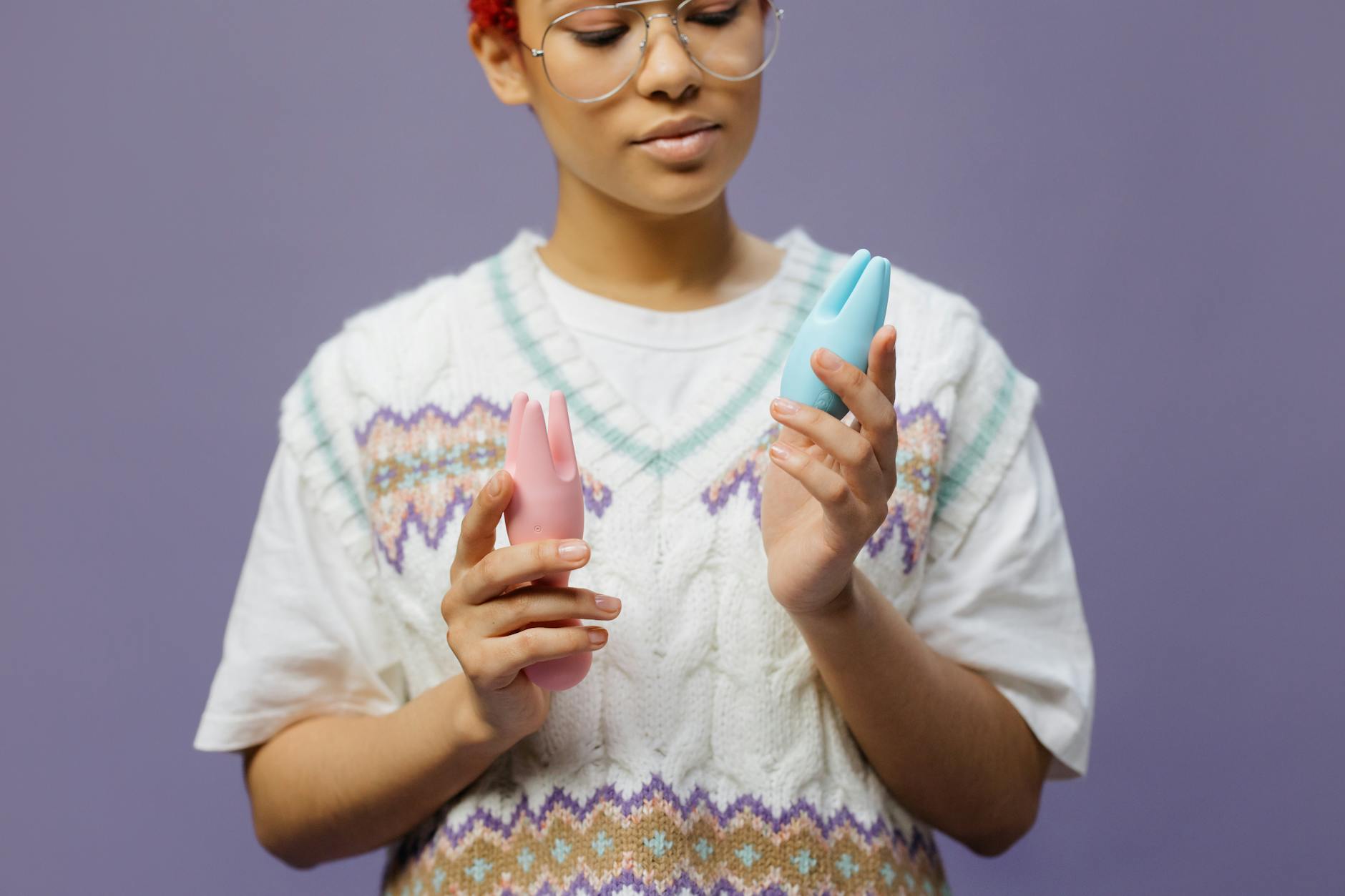
Here's the thing about vibrator intensity
Every body responds differently to the same lemon vibrator. That's not a flaw in the device. That's the whole point. Your nervous system has its own map, and finding what lights it up requires actual exploration, not guessing or copying what worked for someone else.
The Lemon Massager lineup, including the lem vibrator and other clitoral vibrators, are designed with multiple patterns and intensity levels precisely because there's no universal "right" setting. What feels like perfect stimulation to one person might feel too intense, too shallow, or completely miss the mark for another. Learning to decode your own sensitivity is the foundation of everything that comes after.
Why intensity matters more than you think
Here's what most people get wrong: they assume higher intensity equals better sensation. Not true. Too much intensity numbs the very nerves you're trying to stimulate. Too little, and you're left chasing a feeling that never quite arrives.
The clitoris has about 8,000 nerve endings concentrated in a space the size of a pea. That density means it's genuinely sensitive. But sensitivity isn't one-directional. It means your body can feel subtle differences you might miss with a blunt approach.
When you're testing a new lemon sexual toy or exploring different patterns on your existing device, the goal isn't to find the "strongest" setting. It's to find the setting that creates sustained arousal without desensitization. That's different for everyone, and it changes based on your cycle, stress level, sleep, and what's happening in your relationship or your life.
Start with pattern, not intensity
Most people make this backwards. They crank the intensity and stay there, then wonder why sensation fades after ten minutes. Smart exploration starts with the pattern.
Pattern refers to the rhythm or pulse of the vibration. Some devices like the lem vibrator offer steady vibration. Others offer waves, pulses, or more complex rhythms. Your nervous system responds to pattern first.
Here's the process I walk clients through:
Set the intensity to low. On a lemon clitoral vibrator, this is usually pattern 1 or 2. This shouldn't feel like much yet. That's fine. You're getting a baseline.
Spend two to three minutes with each pattern at this low setting. Not trying to orgasm. Just noticing. Does this rhythm feel interesting or boring? Does it feel like it's going somewhere, or does it feel static? Don't overthink it. Your body will tell you.
Move to the next pattern. Again, same low intensity. Repeat for two to three minutes. Notice the difference.
You're not looking for the pattern that "works" immediately. You're mapping the landscape. Some patterns will feel irritating. Some will feel distant. Some will feel like they're building something. That last category is where you stay.
The intensity sweet spot is narrower than you think
Once you've found a pattern that feels interesting, then you can adjust intensity. But here's the trap: there's usually a range of about two to three intensity levels where that pattern actually feels good. Go beyond that, and you'll hit a wall.
For lemon vibrators and similar clitoral vibrators, I typically see people's actual sweet spot between levels 3 and 5 out of whatever the max is. Not because higher is "bad," but because if you go too high too quickly, your nervous system adapts. You stop feeling it. Then you turn it up more. Then you need more next time. It's a treadmill.
The patterns that feel most sustainable are usually the ones that create a building sensation. You should feel something shifting or intensifying over time, not a plateau. If you're at level 6 and it feels exactly the same at minute two as it did at minute one, you've probably gone past your sweet spot.
When I work with couples exploring toys together for the first time, this is where miscommunication happens. One partner assumes "more intense is better" and cranks it up, then the other partner feels numb instead of turned on. They blame the device or assume the other person doesn't know what they're doing. Really, they've just skipped the pattern exploration and jumped straight into intensity racing.
How your nervous system adapts (and why that matters)
Sensory adaptation is real. If you use the same pattern and intensity every single time, your nervous system will stop responding as dramatically. That's not weakness or dysfunction. That's how nervous systems work. They're designed to notice change, not stasis.
This is why people in long-term relationships sometimes feel like pleasure has dimmed, even though nothing has physically changed. If they've been using the same device, the same pattern, the same intensity for months, their nervous system has simply adapted to it. The device still works. The body just needs variation.
The solution isn't to find a stronger vibrator. It's to rotate patterns and intensities. Spend three weeks exploring pattern 2 and 3 at different intensity levels. Then switch to a different pattern altogether. Then back to the first one, but at a slightly different intensity. Your nervous system will feel like you've given it something new, even though you're using the same lemon vibrator.
This is also why people in new relationships often report that sensation feels more intense than it did with a long-term partner. Novelty itself activates your nervous system differently. Understanding that helps take the pressure off.
Testing patterns: what each type usually feels like
Different rhythms create different sensations. Here's what to expect as you're exploring:
Steady vibration feels consistent and building. It's the pattern most people start with because it's predictable. Good for arousal, good for learning your own response.
Pulse patterns (on and off at intervals) create a wave sensation. Some people find this more dynamic because there's a rise and fall. Others find it distracting. Test it for at least three minutes before deciding.
Wave or escalating patterns build intensity within the pattern itself. These are good for people who want that sense of momentum. They can also be tiring if you use them too long.
Rapid or flutter patterns feel lighter and more dispersed. These work well for people who find steady vibration too intense or for external stimulation. They're also good when you're recovering from pelvic floor tightness, since they don't demand the same focused pressure.
None of these is "better." They're different. Your job is to figure out which one your nervous system responds to under your current circumstances.
Sensitivity changes throughout your cycle
If you menstruate, your sensitivity to vibration shifts with your cycle. Right before your period, many people are more sensitive to external stimulation and may prefer lower intensity. During ovulation, when estrogen is highest, many people can handle and enjoy higher intensity. Right after your period, when estrogen is rising, some people find that building patterns feel better than constant stimulation.
This isn't intuitive for everyone. You might discover that the intensity you loved last week feels harsh this week. That's not the device failing. That's your body giving you information about what it needs right now.
If you're on hormonal birth control, these fluctuations are dampened but not eliminated. If you're in perimenopause or postmenopause, sensitivity to direct pressure sometimes increases as tissue changes. Understanding where you are in your cycle or life stage helps you approach intensity expectations with more self-compassion.
Finding your baseline: a structured approach
Here's a framework that works:
Session one: Patterns only. Spend five to ten minutes exploring each pattern at low intensity. Don't expect orgasm. Just notice which patterns feel interesting.
Session two: Stick with your favorite pattern from session one. Spend three minutes at low intensity, then gradually move up one level at a time, spending one to two minutes at each level. Stop when it starts to feel numb or irritating.
Session three and beyond: Return to the intensity level that felt best in session two. Explore it for longer. See if sensation builds or plateaus. Adjust up slightly if it plateaus. Adjust down slightly if it numbs.
After this, you'll have a baseline. But remember: your baseline will shift. Stress, sleep, alcohol, caffeine, what you ate, what's happening in your relationship, where you are in your cycle. All of it matters. The skill isn't finding the one perfect setting and staying there forever. The skill is learning how to read your body's signals and adjust.
When intensity expectations create problems in partnerships
If you're exploring a lemon clitoral vibrator with a partner, this is where communication gets important. One of you might need high intensity to feel stimulated. The other might find high intensity numbing. Neither of you is "wrong." Your nervous systems are just wired differently.
I often work with couples where one partner has been on antidepressants or has naturally lower sensation and needs higher intensity. The other partner has always had strong sensation response and lower intensity feels perfect. They assume they need different devices. Usually, they just need different settings on the same device.
This also comes up when someone is rebuilding arousal after hormonal changes. They might need lower intensity than they used to prefer, and that can feel frustrating or like regression. It's not. It's just the current truth of their nervous system. Respecting that creates more sustainable pleasure than pushing through it.
The lemon sucker advantage for sensitivity testing
If you haven't used a suction-based device like the lem vibrator before, these offer a different sensation profile than traditional vibration. Instead of oscillation, you get gentle suction followed by release. This creates a very different nervous system response.
For people testing intensity for the first time, suction devices can be helpful because the sensation is harder to "numb out" from. Your nervous system responds to the suction itself, not just vibration intensity. This means you can often use a suction device comfortably at settings that would feel overwhelming with pure vibration.
This is particularly useful if you're recovering from pelvic floor dysfunction or sensitive to direct pressure. Suction spreads sensation across a slightly larger area and feels more like gentle pulling than intense buzzing.
What to do when nothing feels right
Sometimes you'll test patterns and intensities and everything feels meh. Not painful, not numbingly intense. Just flat.
This usually means one of four things:
Your arousal foundation isn't there yet. You need more mental warm-up, more anticipation, more context before physical stimulation will feel good. Use the device while you're already partially aroused, not as the starting point.
You're in your head. Self-consciousness, distraction, or pressure to perform can block sensation. This isn't a pattern or intensity problem. This is a nervous system state problem. Take the device off the table for a few days and come back to it.
You actually need a different pattern than you've tested. If you've only tried steady vibration, suction might change everything. If you've only tried high intensity, surprisingly low intensity might unlock something.
Your body is genuinely not responsive right now. Stress, medication changes, sleep deprivation, relationship tension. All of this deadens sensation. A device can't fix what's happening in your life. Address the life thing first.
FAQ: Finding your intensity and pattern
Why does my favorite pattern suddenly feel irritating?
Your nervous system adapts. If you use the same pattern for weeks, your body stops responding as dramatically. Switch patterns for a while. Come back to the original one later. You'll feel the difference again.
Is it normal to need higher intensity than I expected?
Completely. Sensitivity varies based on genetics, medications, stress level, cycle phase, and how much you've used the device before. Higher intensity needs aren't a sign of numbness. They're just your baseline. As long as sensation builds rather than plateaus, you're fine.
Should I use my lemon vibrator the same way every time?
No. Varying patterns, intensity, and even the time of day you use it keeps sensation fresh. Your nervous system responds to novelty. Use that.
What if my partner and I need completely different intensities?
Then you use different settings. If you're using a device together, take turns. When it's your turn, use your sweet spot intensity. When it's their turn, adjust to theirs. If you're using it on each other, ask for feedback rather than assuming.
Can I train my body to need less intensity over time?
Yes and no. You can reset your sensitivity by giving your nervous system breaks and rotating patterns. But your baseline sensitivity is partially innate. Work with what your body actually needs rather than trying to "fix" it into something different.
How long does it take to find my perfect pattern and intensity?
Three to five sessions of focused exploration. After that, you have a baseline you can work from. But remember that baseline shifts with life circumstances. Think of it as something you return to and recalibrate, not something you find once and keep forever.
What if I like my lemon vibrator at high intensity but worry I'm desensitizing?
Take one week off every month. Use that week for different kinds of stimulation or no stimulation. This gives your nervous system a reset. When you come back to your device, high intensity will feel fresh again.
The real skill is listening to your body
Finding the right pattern and intensity for a lemon vibrator or any clitoral vibrator isn't about following rules. It's about developing the skill of reading what your body is telling you in real time and trusting that signal enough to act on it.
If something feels good, stay with it. If something stops feeling good, change it. If you're not sure, try the opposite. Your nervous system knows what it needs. Learning to listen to it is the foundation of everything else.
When intensity expectations create friction in your relationship or with yourself, that's usually a sign that someone's ignoring their body's actual signal in favor of an idea of what "should" feel good. It never works. The body wins. Honor it, and everything else becomes easier.