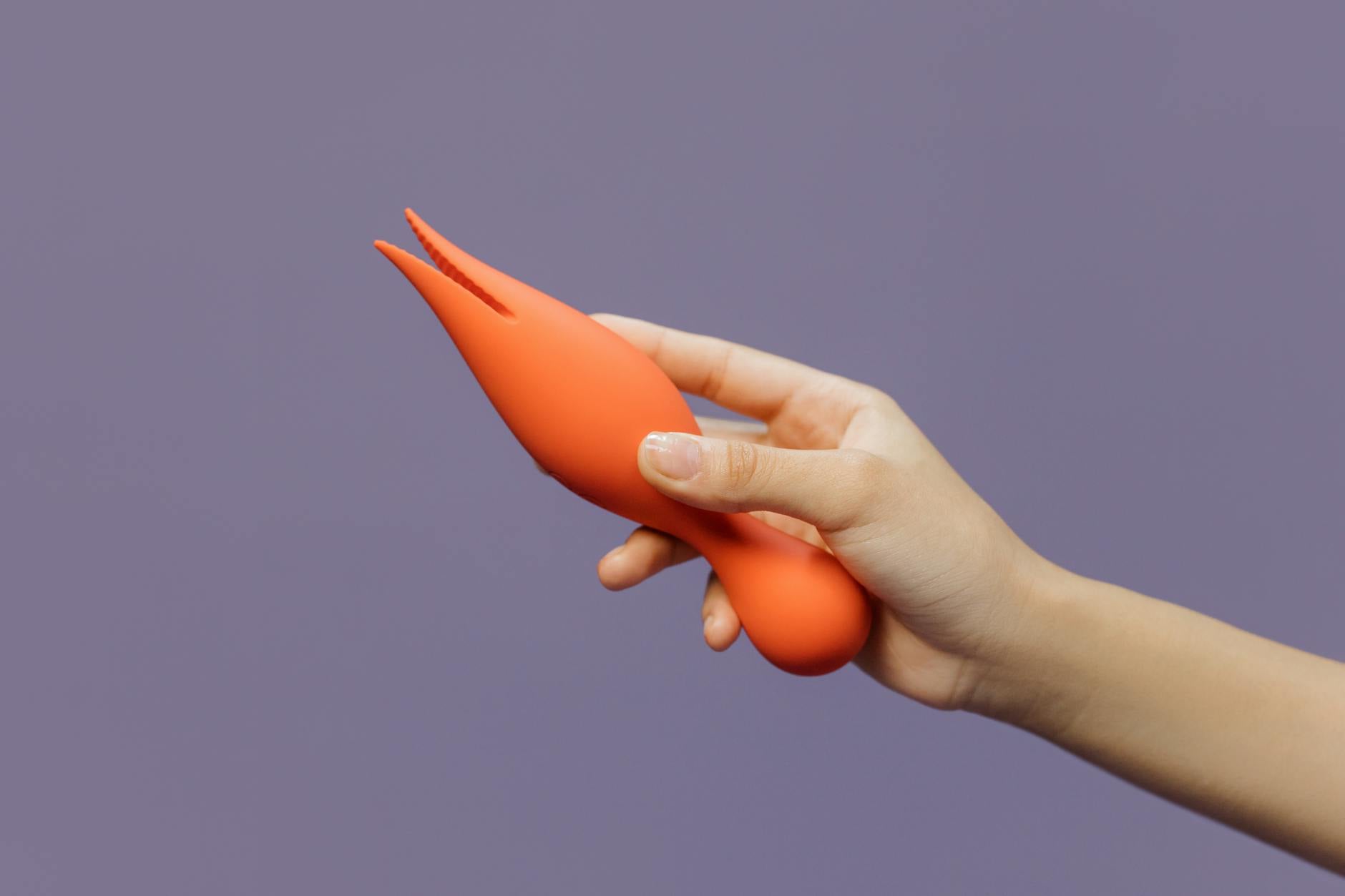
Let's start with the obvious part
Perimenopause is chaos. Your cycle becomes unpredictable. Your period might arrive twice in six weeks, then vanish for three months. Hormones swing wildly, and your body's response to pleasure shifts with them. What felt reliably pleasurable at 35 might feel different at 42, and honestly, even different on Tuesday than it did on Monday.
The good news: this is completely workable. You're not broken. Your nervous system is just retuning, and clitoral vibrators like the Lemon are actually better equipped to work with shifting sensitivity than traditional toys.
What's actually happening in your body during early perimenopause
Your pituitary gland is sending chaotic messages to your ovaries. Some months, estrogen surges. Other months, it tanks. Progesterone follows suit. This hormonal roller coaster changes four things that matter for pleasure:
Arousability shifts. High estrogen weeks? You might feel spontaneously turned on. Low estrogen weeks? Desire might feel more distant, requiring longer warm-up or more deliberate mental engagement.
Tissue sensitivity changes. Around ovulation, when estrogen peaks, your clitoral tissue is plumper and more responsive. In the luteal phase or during low-estrogen dips, that same tissue feels less eager to respond to direct friction. This is why the suction sensation of a lemon clitoral vibrator works so well during irregular perimenopause cycles. Air-pulse technology doesn't rely on the tissue being maximally engorged. It works consistently across hormonal phases.
Orgasm building takes longer or shorter depending on where you are in your cycle. Mid-cycle, with peak estrogen, orgasm might arrive quickly. During low-estrogen phases, the path to climax becomes longer and requires more patience. Neither is better. They're just different.
Lubrication changes weekly. You might notice actual wet sensation some weeks and dryness others. This has nothing to do with arousal or desire. It's a mechanical shift your body is doing without your permission.
Mapping your cycle so pleasure makes sense
Here's the thing about perimenopause: your cycle might be irregular, but it's not random. Even if your period arrives at unpredictable intervals, your hormones still follow patterns within each cycle. Tracking these patterns takes the mystery out of why pleasure feels different.
I recommend a simple approach. Mark the first day of your period (whenever it comes) as day one. From there, you'll typically have a follicular phase lasting 7-14 days, then ovulation around day 12-16, then a luteal phase of 10-16 days before menstruation. Yes, the windows are wide. That's the perimenopause special.
During the first half of your cycle, estrogen climbs. This is often your goldilocks zone for sensation. If you use a lemon vibrator during this phase, you might find you need less warm-up time and can go straight to your preferred intensity.
After ovulation, progesterone rises and estrogen dips lower. Desire often feels less urgent. The clitoris feels less immediately responsive. This is when you want to budget extra time, start at a lower intensity setting on your lemon vibrator, and consider using water-based lubricant even if you usually don't need it.
Adjusting your lemon vibrator technique across the month
The Lemon Massager's suction technology gives you flexibility that traditional vibrators don't. Because it works through air pulse rather than direct vibration, you can shift intensity and duration based on where you are in your cycle without switching toys.
During high-estrogen phases, when arousal builds quickly: Start at intensity level 3 or 4 instead of 1. Your tissue is more engorged and responsive, so you might find lower settings feel less satisfying. Budget 10-15 minutes for warm-up instead of 20-25. Your nervous system is primed.
During low-estrogen phases, when arousal feels sluggish: Begin at level 1 or 2. Your clitoral tissue is less plump, and direct intensity can feel uncomfortable or overstimulating. Take 25-30 minutes for warm-up, even if that feels longer than usual. Your body isn't slow. It just needs a different approach.
Around ovulation specifically, when estrogen peaks: You might experience your most intense sensations of the month. Some people find orgasms arrive faster and feel stronger. If that's you, enjoy it. Some people find ovulation week brings anxiety or emotional vulnerability that makes pleasure harder to access. If that's you, that's normal too. There's no single "right" way perimenopause responds.
Why lubrication matters more during irregular hormonal cycles
Water-based lubricant becomes your best friend during early perimenopause, even if you've never needed it before. Here's why: your vaginal lubrication is controlled directly by estrogen. When estrogen is high, you produce more lubricant. When it drops, production drops. During perimenopause, these swings are unpredictable.
Using lubricant isn't a sign something is wrong. It's a practical tool that keeps sensation comfortable across all phases of your cycle. With a lemon clitoral vibrator, lubricant reduces friction and lets the suction mechanism work more smoothly. Apply a small amount to the opening of the toy before use, and reapply if sensation becomes uncomfortable.
Pro tip: keep your lubricant in the same drawer as your vibrator so it's never an afterthought. Making it routine eliminates the mental load of remembering to grab it.
Emotional variability across your perimenopause cycle
Hormone shifts don't just change your body. They change your mood, your stress response, and your emotional openness to pleasure. This is the part nobody talks about clearly.
During the luteal phase (after ovulation), progesterone rises. For some people, this brings calm and introspection. For others, it brings anxiety, irritability, or emotional heaviness. If you're in the latter camp, you might notice that pleasure feels harder to access emotionally, even if your body is physically capable.
This is where separating physical sensation from emotional arousal helps. You can have a functioning body and still feel disconnected from pleasure. If that's happening, sometimes the answer isn't more intense stimulation. It's permission to take a break, or to focus on sensation without the pressure of reaching orgasm.
A lemon vibrator can work beautifully for low-pressure exploration. Some cycles, you might use it for 20 minutes with zero orgasm goal, just to tune into what sensation feels good that day. Other cycles, you might reach climax in 10 minutes flat. Both are fine.
When to seek help with perimenopause and pleasure
If pain appears during sex or toy use, don't assume it's normal perimenopause. Sharp pain, persistent soreness, or burning sensation can point to genitourinary syndrome (vaginal atrophy), which is treatable with topical estrogen creams. See your GP or gynecologist.
If desire has completely vanished and isn't returning even during your high-estrogen weeks, thyroid function and vitamin D levels are worth checking. Perimenopause hormonal chaos can mask or trigger other imbalances.
If using a clitoral vibrator makes you anxious or brings up emotional resistance that wasn't there before, that's information too. Hormonal shifts can surface old feelings about pleasure, shame, or control. A therapist trained in sexuality work can help untangle what's hormonal and what's psychological.
The tracking shortcut
You don't need an app. You don't need to chart basal body temperature. Just mark your periods on a calendar and note, once a week, how pleasure feels: easy, neutral, effortful, or absent. After three months, a pattern will emerge. Some perimenopause cycles are wildly irregular, but the hormonal phases within each cycle still follow rhythms. Finding yours takes a little attention but transforms how you relate to your lemon vibrator across the month.
Your sensitivity isn't broken during low-estrogen phases. Your nervous system is just operating with different neurochemistry. A tool that works with that variability, rather than fighting it, makes all the difference.
FAQ: Using a clitoral vibrator during perimenopause
Why does my lemon vibrator feel less effective some weeks?
Your clitoral tissue responds to estrogen. During high-estrogen weeks, the tissue is more engorged and nerves are more responsive. During low-estrogen weeks, the same tissue is less plump and sensation feels more muted. This isn't a failure of the toy. It's your body's hormonal rhythm. If you're noticing big week-to-week differences, start tracking your cycle. You'll likely find a pattern.
Can I use my lemon vibrator during my period in perimenopause?
Yes, if you're comfortable. Some people find clitoral stimulation during menstruation relieves cramping. Others find it uncomfortable because the pelvic area is already sensitive. There's no rule here. If bleeding is heavy, you might want to skip internal play but clitoral vibration is fine. If you use the Lemon Massager during your period, just clean it thoroughly afterward with warm water and mild soap.
Does the intensity setting on a lemon clitoral vibrator matter more during perimenopause?
Yes, actually. Because your tissue sensitivity shifts so much month to month, having variable intensity settings becomes more useful than it was in your 30s. Lower settings (1-3) work better during low-estrogen phases. Higher settings (4-8) might feel better during peak-estrogen weeks. Experiment within each phase to find what clicks.
My orgasm feels different or weaker during perimenopause. Is this permanent?
Not necessarily. Orgasm quality often shifts during perimenopause because progesterone changes affect how your pelvic floor engages. Some people report weaker orgasms. Others report more diffuse, full-body sensation. Some cycles bring one, others bring the other. If weakness persists across all phases of your cycle, talk to a pelvic floor physical therapist. They can assess whether pelvic floor tension or weakness is playing a role.
Should I use a different toy during different phases of my cycle?
You don't have to. A lemon vibrator with adjustable intensity handles all phases well. Some people prefer the suction sensation during low-estrogen phases because it's gentler than traditional vibration. If you do have multiple toys and want to switch based on your cycle phase, go for it. But one good toy with settings beats many mediocre toys.
How does anxiety during my luteal phase affect how my lemon vibrator works?
Anxiety doesn't change how the toy functions, but it changes how your nervous system responds to it. During high-anxiety weeks, your parasympathetic nervous system (the relaxation response) is harder to access. This makes arousal feel more effortful. The solution isn't a different toy. It's creating conditions for your nervous system to relax first. Try 10 minutes of deep breathing or a bath before using your vibrator. Sometimes slowing down is the actual upgrade.
Sources
Belardi, B. E., et al. "Perimenopause and Sexuality: A Systematic Review." Menopause Review, 2021.
Acharya, R., et al. "Hormone Changes and Sexual Response in Perimenopause." The Journal of Sexual Medicine, 2019.
Wilson, K. G., & Rees, P. M. "Sexuality and Vaginal Atrophy in Perimenopause: A Clinical Review." Journal of Midwifery & Women's Health, 2020.
Urzua, P., et al. "Clitoral Sensitivity Across the Menstrual Cycle: A Mechanistic Review." Archives of Sexual Behavior, 2018.