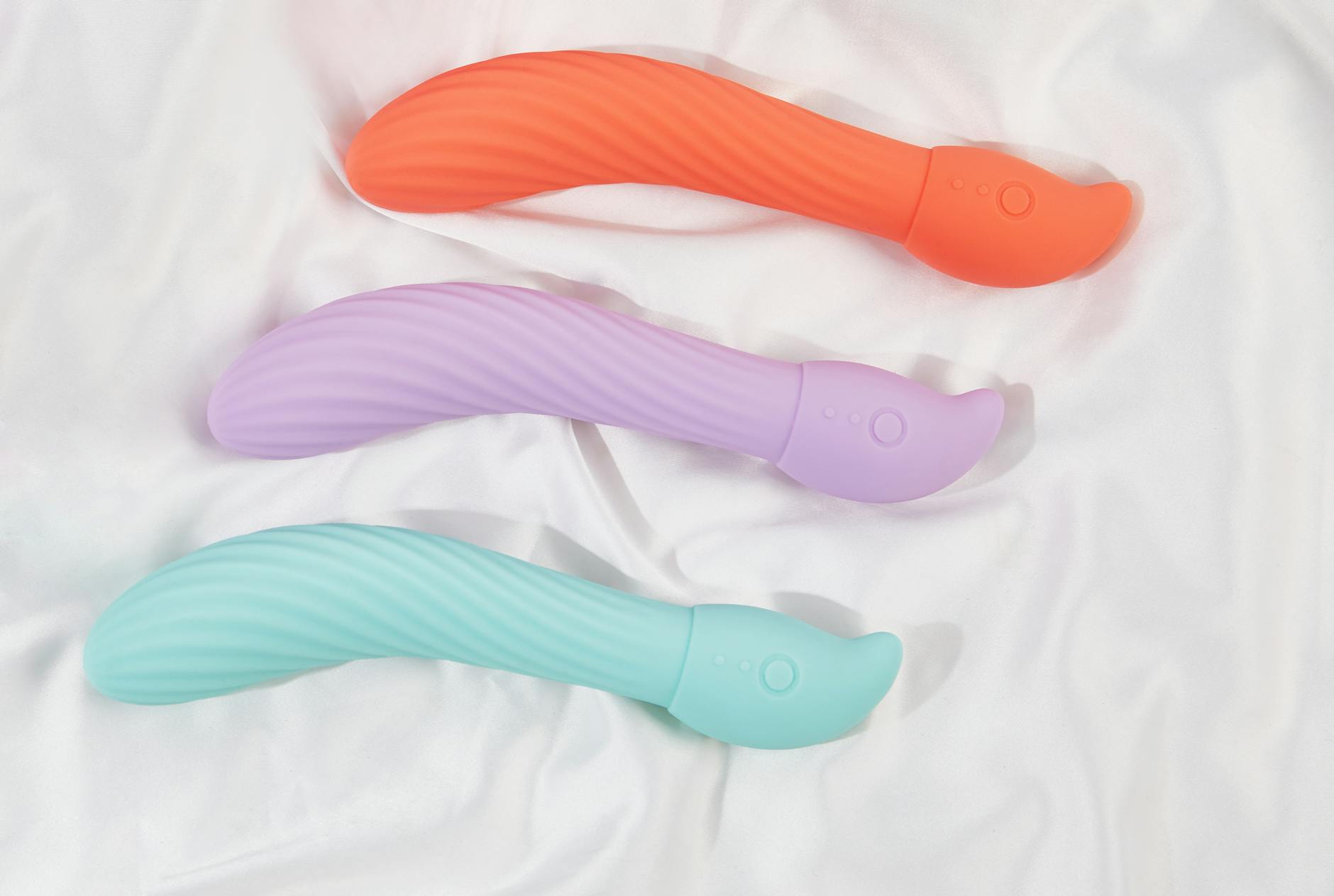
Let's start with what's actually happening
Perimenopause sneaks up. One month your body feels familiar. The next, everything shifts. Vaginal dryness is one of those changes nobody really talks about until it becomes your problem, and then suddenly it's all you can think about.
The good news: using a lemon clitoral vibrator during perimenopause is absolutely possible. You just need to adjust your approach slightly. And honestly, many people find that this phase actually deepens their pleasure in ways they didn't expect.
What perimenopause does to lubrication
Your estrogen levels start fluctuating wildly during perimenopause. This hormone controls vaginal tissue thickness, blood flow to the vulva, and how much natural lubrication your body produces. When estrogen dips, all three of these things change.
You might notice that arousal takes longer to build. Your vulva might feel less engorged during excitement. And yes, natural lubrication might decrease significantly. Some days you'll feel fine. Other days you'll wonder what happened.
Here's what doesn't change: your clitoral nerve sensitivity, your brain's ability to feel pleasure, or your capacity for intense orgasms. The clitoris has its own blood supply and doesn't respond to estrogen the same way vaginal tissue does. So a lemon clitoral vibrator, which focuses directly on this area, often feels incredible during perimenopause.
Photo by Madison Inouye on Pexels
Why vaginal dryness matters for vibrator use
When you're using a lemon sexual toy or any clitoral vibrator, friction and pressure matter. If your vulva feels dry or the surrounding tissue is less engorged, you might experience discomfort or find that stimulation feels either too intense or weirdly muted.
The dryness itself isn't the real problem. It's that your vulva needs a little extra support to respond the way you want it to. Think of lubrication as a conductor. It helps sensation flow smoothly instead of getting stuck or feeling abrasive.
This is also why external lubrication becomes genuinely important during perimenopause, not as a sign that something's broken, but as a tool that makes pleasure accessible again.
The lubrication strategy that actually works
Three rules I recommend to everyone dealing with perimenopause dryness and lemon vibrators.
Rule one: water-based lube, every time. Silicone lube feels richer and lasts longer, but it can degrade silicone toys over time. Water-based lube is your safest bet with a hello nancy lemon clitoral vibrator. Apply it generously to the toy, to your vulva, and honestly, reapply it mid-session if you need to. Your pleasure is worth the five-second pause.
Rule two: warm up longer than you think you need to. During perimenopause, arousal takes time. Budget 15 to 20 minutes of foreplay or solo touch before you even pull out the lemon vibrator. This gives your body time to respond naturally, increases blood flow to your vulva, and means you'll be more comfortable and more sensitive when the toy arrives.
Rule three: start at lower intensities. The lem vibrator has different pattern speeds. Begin at pattern one or two, not because you're fragile, but because your tissue is responding differently right now. You can always turn it up. You can't take it back if you've overstimulated sensitive skin.
How your technique needs to shift
You might have used a lemon clitoral vibrator before perimenopause in a certain way. That technique might need tweaking now.
Apply less direct pressure. Instead of pressing the vibrator firmly against your clitoris, try holding it at a slight angle or with a bit of space between the toy and your skin. This gives you all the vibration without the intensity that can feel uncomfortable on drier tissue.
Use more lateral movement. Instead of holding the vibrator in one spot, try moving it slowly side to side or in small circles. This distributes stimulation across a wider area and often feels less overwhelming than static pressure.
Experiment with the hood. The clitoral hood (the fold of skin covering the clitoris) becomes more important during perimenopause. Try stimulating through the hood instead of directly on the clitoris itself. You get all the sensation with less intensity. Many people discover this is actually their preference even after perimenopause passes.
The timing question
Some people find that perimenopause dryness isn't constant. It fluctuates with your cycle, stress levels, sleep, and overall hydration. You might notice that the week after your period, your body feels more responsive than the week before.
If you're tracking your cycle anyway, pay attention to when you feel most comfortable using a lemon sexual toy. Plan solo pleasure sessions around those windows. This isn't a limitation, it's information. You're learning your body's new rhythm.
When to check in with a doctor
If you're experiencing pain during use, or if dryness is affecting your quality of life beyond just vibrator use, a conversation with your GP is worth having. Vaginal moisturizers (used daily, not just during sex) can help. Topical estrogen creams are safe and highly effective for perimenopause dryness. Systemic hormone therapy is another option depending on your health profile.
You don't have to white-knuckle through this phase. Medical support exists and works.
The emotional piece that nobody mentions
Here's what I see most in my practice: perimenopause dryness often arrives with a narrative. "My body is changing." "I'm aging out." "Sex is going to be harder now." These stories layer on top of the physical changes and make everything feel worse than it actually is.
The truth is more interesting. Perimenopause is a recalibration. Your body is asking you to pay attention. To adjust. To explore what pleasure looks like now, not what it looked like at 25. That's not a loss. It's an invitation to get curious again.
Most of the people I work with who embrace this shift report that their relationship with pleasure actually improves. They know themselves better. They ask for what they need. They stop performing and start experiencing. And a hello nancy lemon vibrator becomes part of that exploration, not a consolation prize.
Frequently asked questions
Can you use a lemon vibrator if you have vaginal dryness?
Absolutely. Lemon clitoral vibrators are actually ideal because they focus stimulation on the clitoris, which doesn't respond to dryness the same way the vagina does. The key is adding external lubrication and adjusting your technique slightly. Water-based lube is your friend.
How long does perimenopause dryness typically last?
Perimenopause itself can last anywhere from a few months to 10 years, though the average is around four to five years. Dryness tends to be worse in the earlier stages when hormonal fluctuations are most erratic. Many people find it stabilizes (either improving or becoming more predictable) as they move closer to full menopause.
Is it safe to use a lem vibrator if you're experiencing perimenopause dryness?
Yes, completely safe. The lemon vibrator design is actually well-suited to perimenopause because suction stimulation requires less direct pressure than traditional vibration. Just use lube, start at lower intensities, and listen to your body's signals. If something feels uncomfortable, pause and adjust.
Does lubrication reduce the sensation from a lemon clitoral vibrator?
No. Water-based lube actually helps sensation by creating a smooth interface between the toy and your skin. Without it, you might feel discomfort that masks the pleasure. With it, you feel everything more clearly. It's a tool that amplifies your experience, not dampens it.
Should you use a lemon sexual toy differently during different phases of perimenopause?
Yes, often. Early perimenopause (with wild hormonal swings) might require more lube and gentler approach. Later perimenopause (as patterns stabilize) might feel more predictable. Pay attention to what feels good and adjust week to week. Your body will tell you what it needs if you listen.
Can perimenopause dryness affect your ability to orgasm with a lemon vibrator?
Not permanently, no. It might feel harder in the moment if you're uncomfortable, but that's a technique problem, not a capacity problem. Once you adjust your approach and add lubrication, most people find their orgasms feel just as strong as before, sometimes stronger because they're paying more attention to what actually feels good.
The bigger picture
You're not broken. Your body isn't betraying you. Perimenopause is a transition, and like all transitions, it asks you to adjust. A lemon clitoral vibrator remains a powerful tool for pleasure during this phase. You're just learning to use it in a way that honors your body's current needs.
Lubricate generously. Take your time. Start slow. And trust that your capacity for pleasure hasn't gone anywhere. It's just wearing a different outfit right now.