
Here's the thing about bringing toys into partnered sex
It's not about fixing anything or proving you need extra help. A lemon vibrator in partnered play is just another form of touch. Sometimes your hand gets tired, sometimes your partner's angle isn't quite right, sometimes you both want to focus on different sensations at the same time. The vibrator is there to let all of that happen without anyone having to apologize.
But there's a script most couples don't have for this conversation, which means the moment often feels awkward or loaded with unspoken worries. That's what I want to untangle here.
The conversation before you even open the box
Let's get the hardest part done first. You need to talk about this before you're in bed trying to figure out logistics.
The conversation doesn't need to be clinical. It's not "I'd like to introduce a mechanical device into our sexual practice." It's closer to "I've been thinking about trying something new. I want to see what it feels like when you're involved." Simple. Direct. No performance language.
Here's what you're actually checking for:
First, curiosity level. Does your partner think this sounds interesting, or are they neutral about it? Neutral is fine. Resistant is a conversation for another time. Enthusiastic is ideal, but enthusiasm can build once they see what the experience is actually like.
Second, any fears hiding underneath. Sometimes a partner worries the vibrator means they're not enough, or that you're annoyed with how sex usually feels. Those worries deserve acknowledgment before you start. Say something like: "This isn't about fixing anything. I just want to try it with you. Your hands and body matter as much as ever." And mean it.
Third, logistics. When would they be comfortable trying this? Not right now, probably, unless you're both very spontaneous. Give each other a few days to sit with the idea. Let anticipation build.
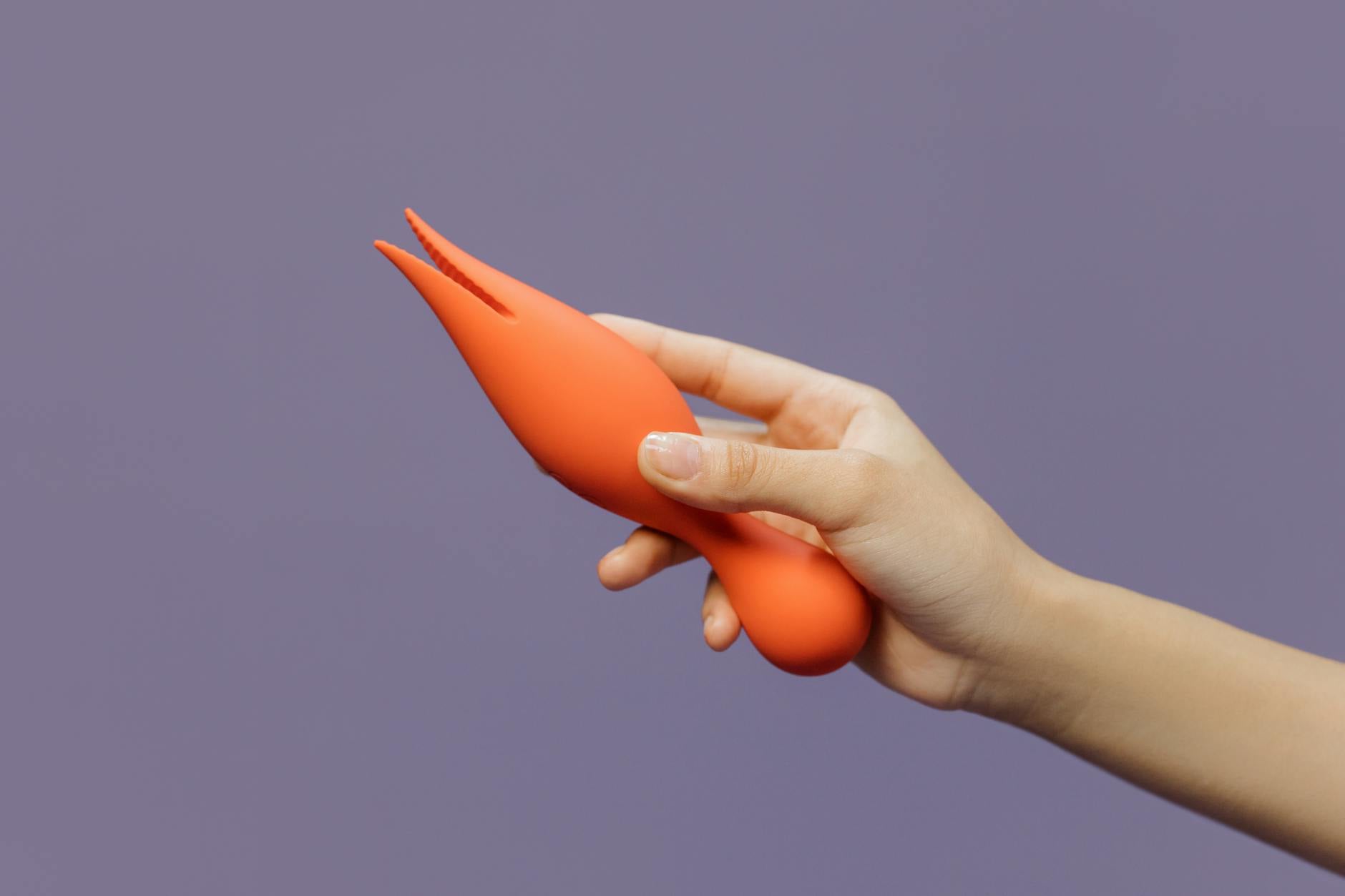
Photo by cottonbro studio on Pexels
Why a lemon vibrator works differently in partnered play
A lemon clitoral vibrator like the one from Hello Nancy is precise. It's not a full-body vibration, not a dildo. It's suction and pulse focused on one area. That matters for couples because it means your partner can use it on you while staying present and engaged. They're not penetrating you. They're not operating something bulky. They're holding something small and directing pleasure to exactly where you're receiving it.
This changes the entire dynamic compared to a traditional vibrator. With a wand, one partner often steps back and lets the other finish solo. With a lemon vibrator, you're both still in the scene. You're touching. You're making eye contact. You're adjusting based on the sounds and movement you're seeing in real time.
You can also use it during sex itself, not just as foreplay. It doesn't get in the way. It enhances. Your partner can penetrate while the vibrator is stimulating your clitoris. Or you can use it yourself while they're inside you, so you're both contributing to your own pleasure.
Positions that actually feel good
Forget what you've seen in videos. Real couples don't twist into pretzel shapes to use toys.
The easiest starting position is you on your back, your partner next to you or leaning over. They can see your face, you can see theirs, and they have good access to your vulva. They're using the vibrator at an angle that feels good, and their other hand can be anywhere. Touching your breasts, holding your hand, stroking your inner thigh.
Variation: you on your back, them kneeling between your legs. This gives them more stability and lets them watch your whole body respond. Some people prefer this because it feels less rushed.
Variation: you on your side, them behind you. This works really well if you like G-spot stimulation alongside clitoral play. They can penetrate with one hand or penis and use the vibrator with the other. The closeness and intimacy in this position often surprises couples.
Variation: you sitting on their lap, facing them. This works best if someone is using the vibrator on themselves while the other person's hands and body are available for everything else. You're looking at each other, you're close, you're in control of the vibrator's pressure.
None of these require gymnastics. All of them allow for contact and communication.
The rhythm conversation nobody has
Here's what usually happens: one person uses the vibrator at one speed, and the person receiving it either loves it or tolerates it. But rhythm isn't one-size-fits-all.
Some people need slow buildup. Start at the lowest setting and increase intensity over 5 to 10 minutes. Other people prefer jumping straight to medium-high intensity. Some people want the vibration to stay constant. Some people want you to turn it on and off in patterns.
The only way to know is to ask. Not in the moment, necessarily. You can say beforehand, "I'll let you know if I want you to go faster or slower or change the pattern." Then during, you guide with sounds or words. "A little slower." "Stay right there." "Switch it up."
Your partner might notice you respond more to certain speeds or patterns. They might start to anticipate what you like. That's the good part. That's where partnered toy use becomes less about the device and more about deepening your ability to read and pleasure each other.
What to avoid (the small stuff that matters)
Don't surprise them with the vibrator already on. Some people find that startling instead of hot. Turn it on so they can see it working before it makes contact.
Don't assume one speed works forever. What feels amazing at minute three might feel overwhelming at minute eight. Your partner should feel invited to adjust.
Don't make it weird if it takes a few tries to find the right angle or speed. "Not quite" is normal. So is "actually, I want to try something else." This is all information. This is all good.
Don't treat the vibrator like the main event if you'd rather it be supplemental. Some couples like it as foreplay that leads to penetrative sex. Some couples like it as the finale. Some couples like it integrated throughout. There's no script.
Integration with actual sex
Let's say you've tried it in isolation and you both enjoyed it. How does this work during partnered sex itself?
The easiest way is you using it on yourself while your partner penetrates. You're in control of your own clitoral pleasure, they're handling their half of the experience, and you're both present. This often leads to more intense orgasms because you're getting both types of stimulation.
Alternatively, your partner can use it on you while you're together. If you're comfortable with them managing it, this can feel incredibly intimate. They're paying attention to your body, adjusting based on your response, staying in rhythm with their own movement.
Timing matters here. Some people need clitoral stimulation to orgasm during penetrative sex. Some people find it too intense. You'll only know by trying and paying attention to what actually feels good versus what you think should feel good.
If you're going to try this, use lubrication. A lemon vibrator works better with lubrication because it reduces friction and lets the suction sensation work more effectively. Your partner's also going to be more confident if everything feels slippery and smooth.
The emotional layer (the part that matters most)
Here's what I see in my practice. Couples who bring toys into sex often report feeling closer afterward, not further apart. But only if the experience felt collaborative rather than performative.
If someone is using a vibrator and performing pleasure they're not feeling, it shows. If someone is being present and responsive and honest about what feels good, that changes everything.
So the real skill isn't technique. It's honesty. Telling your partner "that angle doesn't work for me" or "I need slower buildup" or "actually I really love this, don't change anything" is where intimacy gets built. The vibrator is just the vehicle.
If you're the partner wielding the vibrator, you're also learning what your partner's body responds to. You're reading cues. You're adjusting. You're collaborating on pleasure. That's not boring. That's connection.
Some couples will try this once and decide it's not for them. That's completely fine. Some couples will find it becomes a regular part of their sex life. Also fine. The point is trying it together, talking about it, and deciding what serves both of you.
Cleanup and aftercare
A lemon vibrator takes about two minutes to clean. Warm water and mild soap on the outside, dry thoroughly. Charge it or store it somewhere you both know about.
The aftercare is the conversation. Maybe immediately after, maybe the next morning when you have space. "I liked that." "What would you change next time?" "Want to try that position again?" Even just "thanks for being open to that."
These small conversations are what turn a one-time experiment into an ongoing part of your intimate life together.
People also ask
Will using a lemon vibrator during sex change how my partner feels about me?
No. If anything, it often deepens connection because you're both being vulnerable and honest about pleasure. You're also learning each other's bodies more precisely. That's the opposite of creating distance.
Is it normal if I want to use the vibrator but my partner doesn't want to touch me with it?
Completely normal. Some partners feel more comfortable with you using it yourself while they handle the rest of the experience. That's not a rejection. It's just a different rhythm. You can also start solo and transition to partnered use once everyone's more comfortable.
What if my partner and I want different things frequency-wise?
One person might want to use a vibrator every time. The other might prefer once a month. That's a negotiation like any other part of sex. "What if we try it every other time?" or "You use it when you want, I'll try it when I'm in the mood." You don't have to be synchronized.
Should I be using a specific technique when my partner is using the vibrator on me?
No prescribed technique. Some people like to stay very still. Some people like to move their hips. Some people like to clench and release their pelvic floor. All of these can feel good. What feels good for your body is the right technique.
Can we use a lemon vibrator if we're just starting to explore toys together?
Yes. A lemon clitoral vibrator is actually a great starter toy for couples because it's straightforward. No learning curve. No need for penetration. Just pressure and pulse focused on one area. It's easy to understand what's happening and why it feels the way it does.
What if one of us feels insecure about using a toy together?
Talk about it beforehand, not during. "I'm a little worried that..." gives your partner a chance to reassure you or adjust expectations. Sometimes insecurity lifts once you actually try it and realize it doesn't mean what you thought it meant. Sometimes you need a few conversations. That's normal and okay.
The bottom line
Bringing a lemon vibrator into partnered sex is one way to deepen communication, learn each other's bodies more precisely, and try something new together. It's not required. It's not the only way to have great sex. But if you're both curious, it's one of the lower-stakes ways to explore.
The conversation matters more than the device. The honesty matters more than the technique. And the willingness to be a little vulnerable with each other matters more than anything else.
If you want to explore further, reach out to Hello Nancy or check out our guide to using a lemon vibrator for beginners. Both resources have practical tips for starting out.