
Here's the thing about toys and coupledom
Most couples don't start using toys because they suddenly want to. They start because one person mentions it, the other person either panics or pretends not to hear, and then six months later someone brings it up again in a car ride and it sticks. That's the actual arc, and it's normal.
What's not normal is the fantasy version where you both leap out of bed, magically know what you're doing, and have some kind of transformative experience without any awkwardness. That doesn't happen. But what happens instead, if you actually plan it, is something better: a shared experience that builds trust and deepens intimacy.
I'm going to walk you through how to use a lemon vibrator as a couple, starting with the conversation nobody wants to have and ending with the positioning that actually works.
The conversation nobody wants to start
Let's be real: "Hey, I'd like to try a vibrator together" is not a sentence most people naturally produce. So don't try to be natural. Be direct instead.
The best opener I've found is the lowest-stakes version: "I saw something I'm curious about. Would you be open to trying it together?" That's a question, not a demand. It invites buy-in instead of forcing agreement.
If your partner says no, that's information. Ask why. Is it a physical thing? A psychological thing? A timing thing? Most people's first reaction isn't their final answer. They're usually just startled.
If they say yes, or "maybe," or "I don't know," the next step is to get specific about what you're asking for. You're not asking them to immediately perform differently. You're asking them to try something new together. There's a difference.
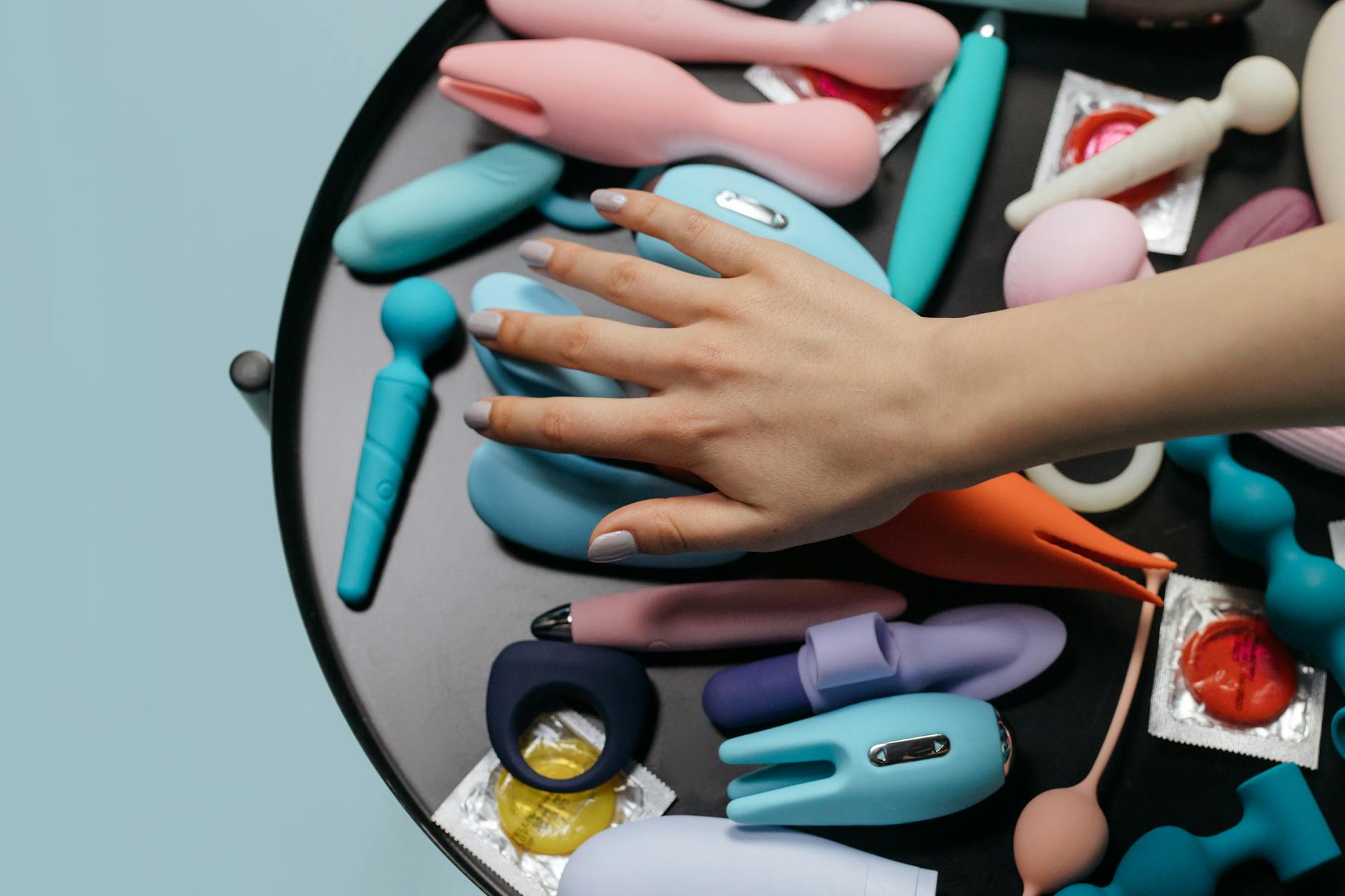
Photo by cottonbro studio on Pexels
Why a lemon vibrator makes sense for couples starting out
Lemon suction vibrators are gentler than traditional vibrators. They don't require direct friction, which means they work well even if you're not fully aroused yet. That matters for couples because nervous energy is real, and your body knows it.
The sensation is also more pinpointed. That means you can use it together without it being overwhelming. Your partner can hold it, or you can, or you can alternate. There's flexibility, which reduces the pressure of doing it "right."
The lemon clitoral vibrator's pattern options also matter for couples. You can start at a low setting and explore together. It's not an all-or-nothing piece of equipment.
Before you buy: what you actually need
One vibrator. Lube. Privacy. Time. That's it.
Get water-based lube. Silicone lube feels richer, but it damages silicone toys. A small bottle of water-based lube costs twelve dollars and will last forever. Don't cheap out here because lube is the difference between "this is nice" and "this is incredible."
Block out at least an hour. Not forty-five minutes. An hour. You're going to spend fifteen minutes just talking and getting comfortable. You're going to need time to laugh if something weird happens (it will). You're going to need time to actually slow down.
Choose a time when you're both relatively sober, reasonably rested, and not thinking about taxes or your mom. That leaves a small window, which is why most couples do this on a weekend morning or early evening, not at midnight after a stressful day.
The actual setup (and why it matters)
Start fully clothed. I know that sounds boring, but it's the opposite. It buys you permission to move slowly.
Sit together. Not side by side like you're watching TV. Close together. Kiss for a minute. Remind your nervous systems that you're safe with each other.
Then, one of you holds the vibrator and runs it over the other person's arm. Not their genitals. Their arm. This is a sensory introduction. It shows what the vibration feels like without the pressure of it meaning something.
Talk about it. "That's stronger than I expected." "That feels kind of nice actually." "I don't like how that pattern feels." All of that is data.
Moving into the body (the thing everyone gets wrong)
This is where most couples stumble: they assume the vibrator goes straight to the clitoris and stays there until something happens. Wrong.
Start outside. Outer labia, inner thighs, the area around the clitoris. The nerve density is high in all of these places, and starting with lower-stakes contact means arousal builds instead of spiking and flatlining.
Use lube. A lot more than you think you need. This reduces friction and makes it feel more like sensation and less like mechanical activity.
Let arousal build for five to ten minutes before you move to the clitoris directly. I know that sounds like a long time. It is. It's also the difference between a vibrator feeling like a tool and feeling like an extension of intimacy.
When you do move to the clitoral area, keep the intensity at a 1 or 2. Yes, really. You can always go up. You can't go back down from overstimulated. A lemon vibrator is sensitive enough that low settings are genuinely effective.
The role of the partner holding the vibrator
Listen to your partner's body. If they're holding still, increase slightly. If they're pulling away or going tense, decrease or pause. This is not performance. This is attunement.
Don't get locked into one spot. Move the vibrator slowly around the clitoral area. Different spots feel different. Let them discover that.
If they guide your hand, follow their guidance. If they don't, keep the pressure consistent but the location variable.
If nothing is happening after fifteen minutes, that's fine. Pause. Check in. Sometimes the intensity is wrong. Sometimes the moment just isn't there. You can try again next time.
When to introduce patterns (and why timing matters)
Most lemon vibrators have multiple vibration patterns. Start with the basic pulse. Don't jump to patterns until someone's already aroused.
Once arousal is building, you can say something like, "Want me to try a different pattern?" This invites participation. Your partner isn't just receiving. They're helping shape the experience.
If a pattern doesn't work, switch back immediately. There's no gold star for sticking with an uncomfortable sensation.
Communication during (the weirdest part)
Talk. Not like you're narrating a documentary, but small touches of language.
"How does this feel?" "Tell me what you want." "Do you want more pressure or different sensation?" These are simple questions that keep the experience collaborative.
Some people get quiet when they're aroused. That's fine. But if you notice your partner going tense or pulling away, check in. "You okay? Want to pause?" is not a momentum killer. It's a trust builder.
If either of you laughs, let it happen. Nervous laughter is completely normal. It usually means you're getting comfortable, not that something's wrong.
After (the part people skip)
Stay there for a few minutes. Don't jump up. Don't talk about whether it was "good." Just be close.
Then, later (not immediately), have a real conversation. "That felt weird at first." "I liked how connected we were." "The intensity was overwhelming." This is data for next time.
You don't have to do this again for weeks. You also don't have to do it exactly the same way. Each time you try, you'll learn something.
Common things that happen (and what they actually mean)
Nothing happens. This is the most common outcome the first time. It doesn't mean you're broken or that this won't work. It means you were nervous and your body was trying to protect itself. This is normal. Try again in a week.
Orgasm happens. Lovely. The second time might be easier, or it might not. Don't expect consistency yet.
It feels good but weird. That's accurate. A lemon vibrator feels different from hand or mouth because it is different. Your nervous system is learning new input. Give it time.
One person wants to keep going, the other wants to stop. Respect the stop. And talk about it later when nobody's aroused. "I want to explore more. Does that work for you?" is different than "Let's keep going" in the moment.
You both realize you like this. Now you have something new to build on. Some couples use a vibrator once a month. Some use it regularly. Some use it for a few months and then it becomes background. All of that is fine.
Why this matters for your relationship
Using a toy as a couple is not about fixing anything or making sex better. It's about saying, "I'm curious about intimacy with you. Let's explore together."
That message, that willingness to be vulnerable and try something new, is what actually deepens a partnership. The lemon vibrator is just the vehicle.
If you approach this with genuine curiosity instead of performance pressure, something shifts. You stop trying to be sexy and start being present. That's when things actually work.
Frequently Asked Questions
What if my partner doesn't want to try a vibrator? Should I push the idea?
No. Push and they'll dig in. But curiosity doesn't go away. Instead, ask why they're hesitant. Is it anxiety about their own pleasure? A feeling that toys replace them? A genuine "not interested right now"? Those are different conversations. Once you understand the actual concern, you can address it without forcing anything. Sometimes the answer is "not yet," and that's fine.
Can we use a lemon vibrator during penetration?
Yes, absolutely. Some people position it on top during penetrative sex, or hold it to the side. The advantage of a lemon suction vibrator is that it doesn't require direct pressure, so you can adjust position without losing sensation. Start with whichever partner is receiving being on top or on their back so gravity helps. Explore what works for your bodies.
What if I orgasm but my partner doesn't? Is that a problem?
No, but it can feel awkward. The solution is to talk about it before you try again. "I'm okay with this. We have all the time." Or "I want to keep going." Or "Let's pause and come back next time." There's no rule that says both people have to finish. Pleasure is the goal, not synchronized orgasm.
How long does it take to get used to a vibrator in partnered sex?
Usually three to five times. The first time is "what is happening?" The second time is "okay, I see." By the fifth time, your nervous system has filed it under "normal," and you can actually relax into the sensation. Be patient with yourself and your partner.
Should we talk about using a vibrator before we buy one, or just surprise each other?
Talk first. Surprise toys rarely land well because someone's nervous system goes into alert mode instead of openness. A conversation feels awkward, but surprise feels invasive. Choose awkward. It builds trust.
If we try this and don't like it, does that mean something's wrong with us?
No. Some couples love toys. Some don't. Some love them for a season and then stop. You don't have to want what other people want. You just have to want what you and your partner actually want. If you try a lemon vibrator once and decide it's not for you, that's complete information. You tried something together. That's the whole point.
The bottom line
Using a clitoral vibrator as a couple isn't about fixing anything or performing for anyone. It's about curiosity, communication, and showing up for each other's pleasure. If you approach it with genuine interest instead of pressure, you'll learn things about what you both like. And that, more than the vibrator itself, is what matters.
Ready to explore? Start with the conversation. Everything else follows.