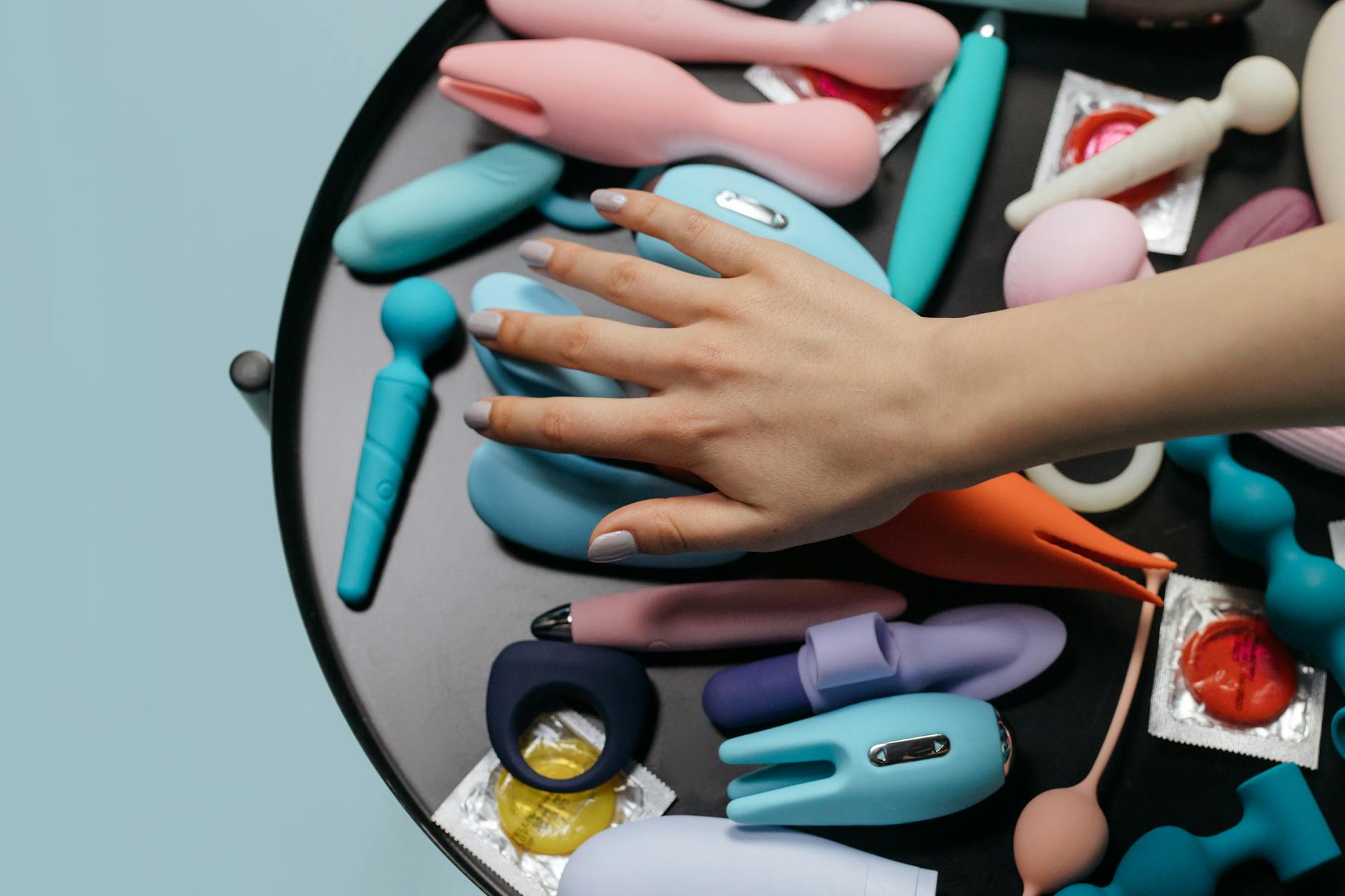
How to Use a Lemon Vibrator When Your Partner Resists Toys
Let's be real. One person wants to introduce a vibrator. The other person sees it as a threat, a rejection, or just weird. This is one of the most common friction points I see in couples therapy, and it's almost never actually about the toy.
Partner resistance to vibrators usually stems from one of three things: fear that the toy will replace them, shame about sexuality, or simply not knowing what they're looking at. The good news is that all three are addressable. And a lemon vibrator, specifically, is often the easiest entry point because it looks less intimidating than a traditional vibrator and the sensation is genuinely different.
Here's how to move from resistance to genuine curiosity, and then to shared pleasure.
Understanding why the resistance is actually happening
Your partner isn't anti-pleasure. They're anti-something, and you need to figure out what.
The most common fear is replacement. He thinks you want the toy instead of him. She worries you're unsatisfied. They imagine you'll prefer the sensation and pull away from partnered sex entirely. This fear is almost never about the toy. It's about security, desirability, and being enough.
The second layer is shame. Maybe your partner grew up hearing that vibrators were dirty or shameful. Maybe they think wanting toys means something is wrong with them. Maybe they're worried about judgment from a partner they care about.
The third reason is just practical confusion. They don't know what a clitoral vibrator does, how it's used, or why you'd want it. They've never seen one up close. It seems random or unnecessary.
Your job isn't to convince them they're wrong to feel resistance. Your job is to separate their fear from the actual tool, and show them that pleasure is collaborative, not competitive.
The conversation that usually doesn't happen (and should)
Most people introduce the idea of toys sideways. "I saw this thing online," or "My friend mentioned..." or bringing one home without warning. That almost always backfires.
Instead, start with the emotional conversation. Not the sex one yet. The connection one.
Say something like: "I've been thinking about ways we can both feel good together, and I want your input before I do anything." That's different from "I want to buy a vibrator." The first one is about partnership. The second one sounds like a unilateral decision.
Then ask genuine questions. What does he think a vibrator is for? What's her actual concern? Is he worried it means you're not satisfied with him? Does she think it's cheating? Is he just uncomfortable with the idea of toys in general?
Listen to the actual answer, not the surface answer. "I don't know, it just seems weird" often means "I'm worried this means something about our relationship." Once you hear that, you can address the real issue.
Why the lemon vibrator specifically works for resistant partners
A lot of people's resistance softens when they actually see the thing. The lemon clitoral vibrator looks less clinical than a traditional vibrator. It's almost cute. It's visually less intimidating.
But the real reason it works is sensation. The lemon vibrator uses suction stimulation, not just vibration. That's genuinely different from vibration alone. When your partner understands that this isn't replacing anything. It's adding a different sensation that fingers and other touch can't provide. The framing shifts.
You can literally say: "This does something my body responds to that's different from what we already do together. It's not better or worse. Just different. And I'd like to explore it with you here, with you present."
That reframe. With you. Is everything. It makes the vibrator a tool for connection, not a replacement.
How to actually introduce it (step by step)
First, pick a moment that's not sexual. Show it to them outside the bedroom. "This arrived. I want to show you what it actually does." Normalize it as an object first.
Let them hold it. See what it looks like. Ask them to turn it on at low setting. It's less intimidating when you demystify it.
Then explain the sensation. "It's suction. Like this," and you can show them on your finger or wrist. It's not scary. It's just a different kind of stimulation.
Next: ask if they'd be willing to try it together. Not alone. Not as a surprise. Together, in a low-pressure moment. Maybe during foreplay. Maybe while they're inside you. Maybe while they're watching.
Here's the key part: their comfort might mean starting with them in control. They hold the lemon vibrator. They decide the speed. They decide where and when it touches. This flips the narrative from "I need this because you're not enough" to "I trust you with this."
That shift changes everything.
What to actually do with it (the mechanics)
Start with patterns or speeds one through three on the Lemon. Low intensity. You can always go higher, but you can't un-intense something.
If your partner is holding it, let them lead. Communicate what feels good. "A little lower," or "Stay right there." They're getting tactile feedback and seeing your pleasure in real time. That typically dissolves the replacement fear fast.
Alternate. Maybe they use it for a bit, then you take over. Maybe it's part of partnered sex, not separate from it. The lemon vibrator is small enough to work alongside other touch. That's actually one of the best ways to introduce it. It's not instead of. It's in addition to.
If your partner is genuinely uncomfortable, don't push. But do try this: let them watch you use it alone first, in a non-pressured moment. No performance. Just you, alone, figuring out what you like. Sometimes seeing genuine pleasure without any expectation on them shifts the energy.
The resistance-to-curiosity timeline
Resistance doesn't flip to enthusiasm in one conversation. It usually goes: resistance, skepticism, curiosity, willingness, then genuine interest.
That process might take weeks. That's fine. You're not trying to convince them to do something they don't want to do. You're inviting them into something that feels good for both of you.
If after a genuine conversation and exploration they still don't want to engage with toys, that's also valid. But most of the time, when the fear underneath is addressed and the tool is demystified, resistance softens.
What usually changes people's minds is seeing their partner genuinely aroused and knowing they had a role in that. The lemon vibrator often gets there faster because the sensation is so different that it's clearly not a replacement. It's an addition.
When resistance is a deeper issue
Sometimes vibrator resistance is really a symptom of something else. Mismatched desire. Resentment about sex. Shame about the body. Control issues.
If your partner is resistant to the toy but also resistant to foreplay, communication, or any novelty in bed, that's a different conversation. You might want to consider exploring how to rebuild connection with a long-term partner or working with a couples therapist.
But if it's specifically toy resistance in an otherwise solid relationship, the steps above usually work. The barrier is almost always misunderstanding, not actual incompatibility.
Making it about pleasure, not pressure
This is the biggest mindset shift: vibrators aren't a solution to a problem. They're a way to expand pleasure. If your partner feels like you're bringing a toy because something is wrong with them, that will never land.
If your partner understands that you're interested in exploring sensation together, that usually resonates.
The lemon vibrator is small, quiet, and the sensation is distinct enough that it feels collaborative rather than competitive. Use that. Show them. Let them participate. Most partner resistance melts when the fear is named and the tool is normalized.
Your pleasure matters. Their comfort matters. Those two things aren't actually in opposition. They just need the right conversation and the right entry point.
People also ask
Why does my partner think a vibrator means I'm not satisfied?
It's usually not rational. It's emotional. They've heard somewhere that toys are for people with unsatisfying sex lives, and they internalized it as a personal rejection. The truth is that lots of people with great sex lives use toys sometimes. It's not a statement about your partner. It's a statement about your body's capacity for pleasure. Once they understand that, the anxiety usually eases.
Can I use a lemon vibrator if my partner doesn't want to be involved?
Absolutely. Solo pleasure is valid and separate from partnered sex. That said, if your partner is actively against you using toys at all, that's worth exploring. Are they uncomfortable with you having pleasure they're not controlling? That's a deeper conversation about autonomy and trust, not about the vibrator itself.
What if my partner says vibrators are unnatural?
So is antibiotics, glasses, and literally everything else we use to enhance our lives. If your partner thinks pleasure should only come from one specific source, that's a belief worth questioning together. Natural doesn't mean better. A lemon clitoral vibrator offers sensation that hands alone can't provide. That's not cheating. That's expanding the menu.
How do I know if my partner's resistance is just nervousness or actual dealbreaker incompatibility?
Nervousness usually softens when the fear is addressed and they see genuine pleasure. It might take a few conversations. Dealbreaker incompatibility usually shows up as rigidity plus resentment. They don't just resist the toy. They resist talking about it, they punish you for wanting it, or they frame it as a sign of infidelity. If it's the second pattern, that's worth addressing in couples therapy, not just trying harder to convince them about the vibrator.
Is there a way to make it feel less threatening to introduce?
Yes. Frame it as exploration together, not as a solution to a problem. Let them hold it first. Show them the sensation without pressure. Use it in front of them so they see your pleasure. Most importantly, ask what they actually fear instead of assuming. Once you know the real concern, you can address it directly.
What if we try it together and they hate it?
That's information, not failure. Some people genuinely don't like the sensation of suction or vibration, and that's fine. The goal isn't to force enthusiasm. It's to try something together and see what works for both of you. If the lemon vibrator isn't it, something else might be. Or maybe toys just aren't your couple's thing. Both are okay.
The bottom line
Partner resistance to toys is almost always about fear underneath, not actual aversion to pleasure. Once you separate those two things, most resistance shifts. The lemon vibrator is small enough, different enough, and collaborative enough to work as the entry point. Use it that way. Let your partner lead sometimes. Make it about shared exploration, not individual need. Most of the time, that changes the conversation entirely.