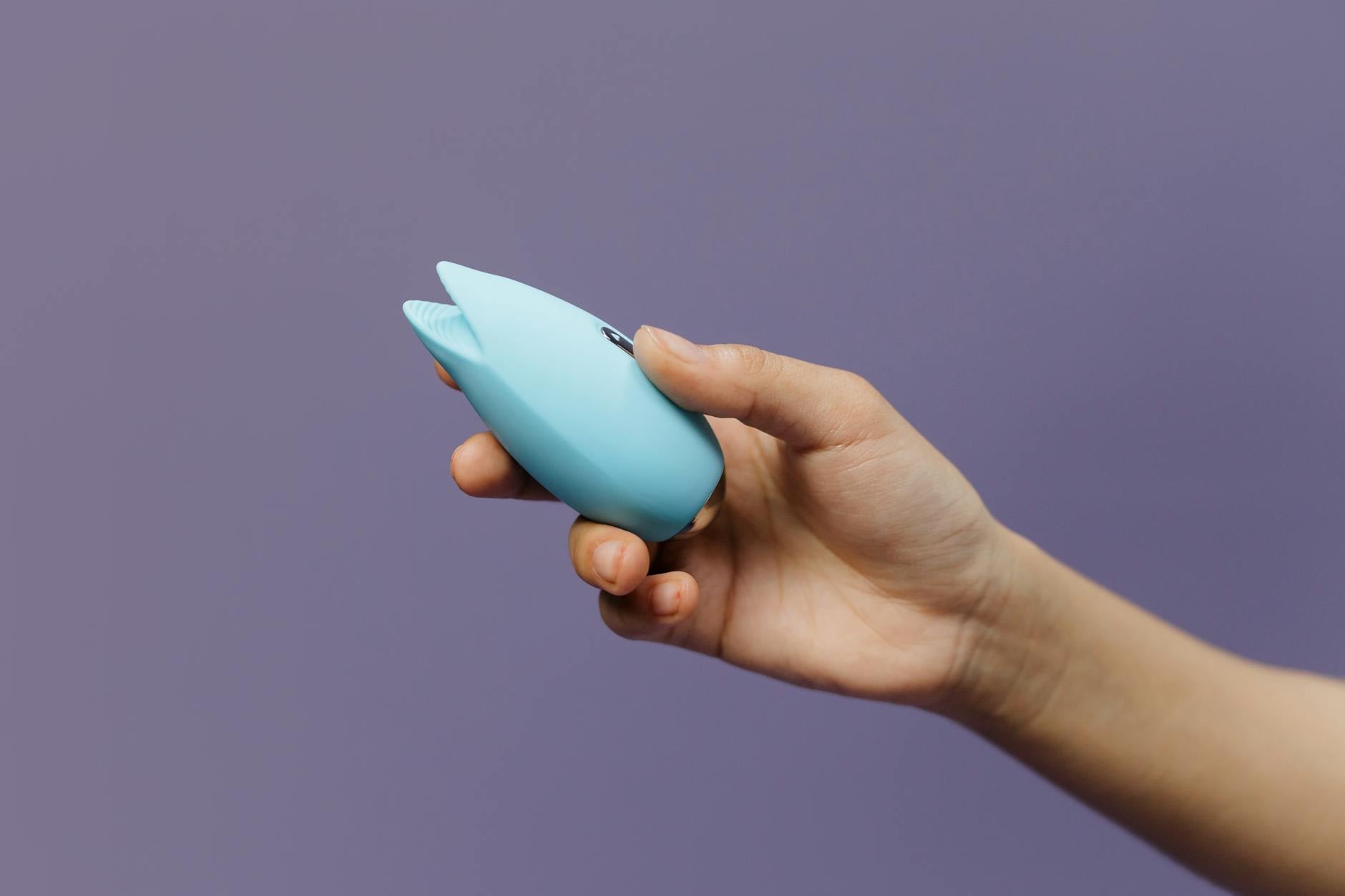
Here's what actually happens when stress kills his (or her) libido
Your partner isn't sleeping well. Work is relentless. Maybe there's a sick parent, money worries, or a deadline that's eating them alive. And suddenly, the first thing that gets dropped from their life is sex. Desire evaporates. Touch feels like another demand. When you reach over, they deflect.
This isn't rejection of you. It's their nervous system in a lockdown state.
Stress triggers the parasympathetic nervous system to shut down the parts of the brain responsible for arousal. Blood pressure rises, cortisol floods the body, and the reward centers that process pleasure literally go offline. Your partner isn't choosing to avoid you—their body is in survival mode.
Here's the thing nobody tells you: a Lemon Massager clitoral vibrator can actually help break that cycle. Not by pressuring them into sex, but by creating a low-stakes entry point back into their body.
Why regular approaches backfire when stress is in the room
The usual suggestions fall flat when your partner is running on empty:
"Let's have more sex" becomes another obligation. When someone is stressed, adding a goal or expectation makes their body tense more, not less. Your partner hears "we should" and their nervous system hears "you're failing at this too."
"Can we be intimate?" carries weight. The word "intimate" implies vulnerability and performance. For someone already depleted, the emotional labor of being present and present-able feels impossible.
"Let's plan a date night" requires energy they don't have. Stressed partners often can't even imagine feeling desire in a week. Waiting makes the guilt pile up.
What works is something smaller, more sensory, and zero-pressure. A lemon clitoral vibrator approach reframes pleasure from "we need to fix this" to "let's remember what good feels like right now."
The reframe that actually works
Instead of positioning a Lemon Massager as "let's have sex," position it as "let's spend 10 minutes in your body without thinking about anything else."
Stressed partners need permission to be selfish. They need to know that you want them to feel good, not that you want them to perform well. A clitoral vibrator—especially one as gentle and non-intimidating as the Lem—signals that this is about sensation, not sexual achievement.
The invitation sounds like: "I noticed you've been wound pretty tight. I want to help you remember what pleasure feels like. No pressure, no performance. Just you feeling something good for a few minutes."
Notice what's missing: sex, goal, reciprocal expectation, timeline.
How to introduce the Lem when they're in avoidance mode
Timing matters enormously. Don't bring this up during conflict or when they're actively stressed. Bring it up when they're calm and alone, preferably when you're both relaxed.
Keep it collaborative, not suggestive. "Hey, I was reading about this, and I thought about us. People who are stressed often need a really low-key way back into their bodies. What if we tried something that's literally just 10 minutes of you feeling good, no other expectations?"
Name the thing you actually want. "I miss you. I miss us. And I think you deserve to feel good. Can we try something?"
Make it optional. Truly. If they say no, drop it without resentment. Stress-avoidant partners are hyperaware of your disappointment—it adds to their guilt. A soft "no problem, let me know if you want to" actually makes them more likely to revisit it later.
How to actually use a Lemon Vibrator with a stressed, avoidant partner
If they agree, the execution matters as much as the setup.
Start with them clothed. Undressing is a vulnerable step. Let them stay in whatever they're wearing. A lemon clitoral vibrator works through fabric anyway. The Lem's gentle suction design means they can experience pleasure without the intensity of direct pressure, which stressed bodies often reject.
Use lower patterns first. The Lem has multiple intensity settings. Start at pattern 1 or 2. Stressed nervous systems are hypersensitive. You're not going for an orgasm; you're going for the sensation that their body is capable of feeling good. Let them float there.
Your job is to be present and quiet. Don't narrate, don't coach, don't ask "do you like that?" Let them be alone with the sensation. Your physical presence (hand on their shoulder, lying next to them) is enough. You're there as a witness, not an audience.
Keep it short. 5-10 minutes. That's it. When stressed people start to feel good, anxiety sometimes sneaks in and tells them they shouldn't be relaxing. A short window keeps them from hitting that mental wall.
Let them choose when to stop. They might want to continue into an orgasm. They might want to stay in sensation. They might feel anxious and need to pause. All of these are fine. You're building trust with their body, not crossing a finish line.
After: The conversation that actually rebuilds connection
Don't immediately ask "was that good?" Their stressed brain will still be spinning. Instead, let them rest for a few minutes. Then ask something simpler: "How do you feel?"
Their answer will tell you what you need to know. If they say "relaxed" or "quieter," you've hit the goal. If they say "tense" or "weird," that's information too—their nervous system needed something different, and that's completely normal.
The real conversation happens later, when they've had time to sit with it. That's when you might hear "I forgot what that felt like" or "I didn't realize how much I needed that." That's the opening.
When a stressed partner's nervous system finally remembers pleasure, reconnection becomes possible. The Lem is just the tool. Your patience is the real medicine.
Why this works for the relationship, not just the moment
A lemon sexual toy in this context does something bigger than create pleasure. It interrupts the stress-avoidance loop. When someone avoids intimacy due to overwhelm, they usually feel guilty about avoiding, which creates more stress, which makes them avoid more. It's a spiral.
Using a Lemon Massager clitoral vibrator reframes intimacy as something that belongs to their body, not to the relationship's needs. It says "you deserve to feel good" instead of "we need to fix us." That shift is huge. Suddenly, they're not failing at partnership—they're practicing self-care. And you're the one making it possible.
Many of the couples I work with find that once a stressed partner rediscovers that their body can feel pleasure, they start reaching for it themselves. They might use it alone, or ask you to use it again, or feel more open to other forms of touch. The Lem becomes a kind of reset button for the nervous system.
The stressed-avoidant partner often says the same thing: "I didn't know I needed permission to just feel good without it being about sex." That permission is the gift. The vibrator is just the vessel.
When this approach doesn't shift anything
If your partner remains distant and avoidant even after you've tried this a few times, stress might not be the real story. Sometimes avoidance is about resentment, unresolved conflict, or something deeper—depression, past trauma, or a fundamental mismatch in desire.
That's the moment to get help. A therapist who specializes in couples work can identify what's actually happening beneath the surface. A Lemon Massager clitoral vibrator is a beautiful tool for rebuilding sensation and connection, but it's not a substitute for real conversation or professional support when the gap is wider.
The practical next steps
If you're going to try this, set yourself up for success: choose a time when you're both calm, be clear about what you're suggesting (and what you're not), and make the first experience feel low-pressure and short. A lemon vibrator can work beautifully in a stress situation—but only if both of you understand that you're trying to rebuild one small thing: the knowledge that pleasure is still possible.
Your partner's stress is real. Their avoidance makes sense. And your desire for closeness matters too. A Lem can be the conversation starter that bridges that gap—the gentle tool that says "let's remember this together" without any demand at all.
People also ask
Can using a vibrator make my stressed partner feel more pressure to perform?
Absolutely, if you frame it wrong. That's why the invitation matters so much. If you present it as "let's use this to fix our sex life," their nervous system hears another performance demand. If you present it as "I want you to feel good, no strings attached," it becomes permission instead of pressure. The vibrator itself is neutral—the context you create around it determines whether it feels like care or criticism.
How often should we try this if my partner is still stressed?
Start with once every week or two—no schedule, no expectation. If your partner finds it genuinely helpful, they might ask for it more. But for someone in active stress, frequency doesn't matter. The goal isn't to build a new ritual; it's to remind their body that pleasure is still accessible. Once their stress level drops naturally, other forms of intimacy often become easier too.
What if my partner feels awkward the first time we use a lemon clitoral vibrator?
That's completely normal. Awkwardness usually means something is unfamiliar, not wrong. Keep the first time very simple—minimal setup, minimal conversation, minimal eye contact if that feels easier. Many people need a second or third time before the novelty wears off and they can actually relax. Don't judge the first attempt as a referendum on the whole idea.
Should I use the Lem on my partner, or should they use it themselves?
It depends on what they're comfortable with. Some stressed partners want the passivity of being given pleasure. Others feel vulnerable being watched and prefer to explore alone. Ask: "Would you like me to do this, or would you rather do it yourself?" There's no right answer. Either way works. The key is that they feel agency over their own body.
Can this help if my partner has sexual trauma?
Very carefully, and ideally with a therapist's guidance. Trauma-informed touch requires explicit consent at every stage, zero pressure, and the ability to pause immediately if something triggers. A Lemon Massager vibrator can actually be helpful because it's less physically vulnerable than partnered sex—but only if your partner is ready and you're both prepared for the possibility that something unexpected comes up emotionally.
What if my partner tries it once and never wants to do it again?
Then you have useful information: either the moment wasn't right, or it wasn't the tool they needed. Don't push. Instead, ask: "What would actually help you feel closer to me right now?" The answer might be nonsexual—quality time, help with their stress, or just patience while they work through whatever's happening. The goal isn't to force pleasure back. It's to listen to what your partner actually needs and show up for that.
Final thought
Intimacy doesn't have to look the way you think it should. When stress is in the room, sometimes the most intimate thing you can do is help your partner feel good without asking anything in return. A Lemon Massager clitoral vibrator can be that gesture—a small, gentle reminder that pleasure is still theirs to claim, whenever they're ready.