
Here's what nobody tells you about pleasure after divorce
Divorce ends a marriage. It does not end your right to pleasure or your capacity for it. And yet many people emerge from separation believing the opposite. They've spent years calibrating their bodies and desires around someone else's presence, preferences, and timing. When that structure dissolves, so does the permission to want.
I work with clients rebuilding their lives post-divorce every week. The conversation rarely starts with sex. It starts with "I don't know what I want anymore" or "I feel like I've forgotten how my body works." Both statements are saying the same thing: pleasure got lost in the logistics of uncoupling. Rediscovering it is not indulgent. It's part of the work.
Using a lemon vibrator for solo pleasure after divorce is one of the gentlest, most practical ways to start that conversation with yourself again. This guide walks you through why, how, and what to expect.
Why solo pleasure matters after major transitions
When you've been in a long relationship, your sexual narrative becomes a duet. You learn your partner's rhythm, preferences, hangups. You time your arousal to theirs. You optimize for their finish line. This isn't wrong. It's just what happens over years of shared intimacy.
Divorce breaks that script abruptly. Suddenly you're alone in the bedroom and you may have no idea what you actually want independent of someone else's presence. This is normal. It's also deeply disorienting.
Here's the clinical part: solo pleasure resets your nervous system's baseline for arousal. When you're exploring your body without an audience (real or imagined), without performance pressure, your brain records what actually feels good. That data is foundational. It rebuilds your confidence and reconnects you to your own desire.
Most of my clients report that solo exploration post-divorce becomes the first time they've experienced true agency in their sexuality. That's not nostalgia talking. That's reclamation.
Why a lemon vibrator works for this specific transition
The Lemon Massager's clitoral vibrator design is particularly useful for rediscovery because it focuses purely on external sensation without any penetration. After years in a relationship, many people feel disconnected from non-partnered pleasure. A toy that prioritizes clitoral sensation alone gives you permission to keep the focus narrow and exploratory.
The suction-based technology also means you're not replicating partner-based touch. You're creating a sensation that's distinct from what you've known. That distinction matters psychologically. It says: this is new territory, this is for you, this is separate.
Clitoral vibrators like the Lemon are also forgiving if you're out of practice. You can start gently, take your time, stop whenever you need to. There's no pressure to perform for anyone. That safety is essential when you're rebuilding trust with your own body.
Setting up your first session alone
Start small. You don't need hours or perfect conditions. Twenty minutes in a locked bedroom with your phone on silent is enough.
Think about environment. Not because ambiance is required, but because it signals to your nervous system that this is intentional self-care, not a rushed moment stolen between tasks. That might mean a dimmed room, a favorite playlist, or just a closed door. Whatever tells your body: this time is mine.
Warmup matters more after time away from solo exploration. Spend 10 to 15 minutes touching yourself before introducing the Lemon. Your clitoris responds more readily when you've already started building arousal. This isn't about efficiency. It's about meeting yourself where you are.
Lubrication is your friend. Even if you produce plenty of natural lubrication, adding water-based lube removes any friction hesitation. It's one less thing to negotiate with your body. Use it generously.
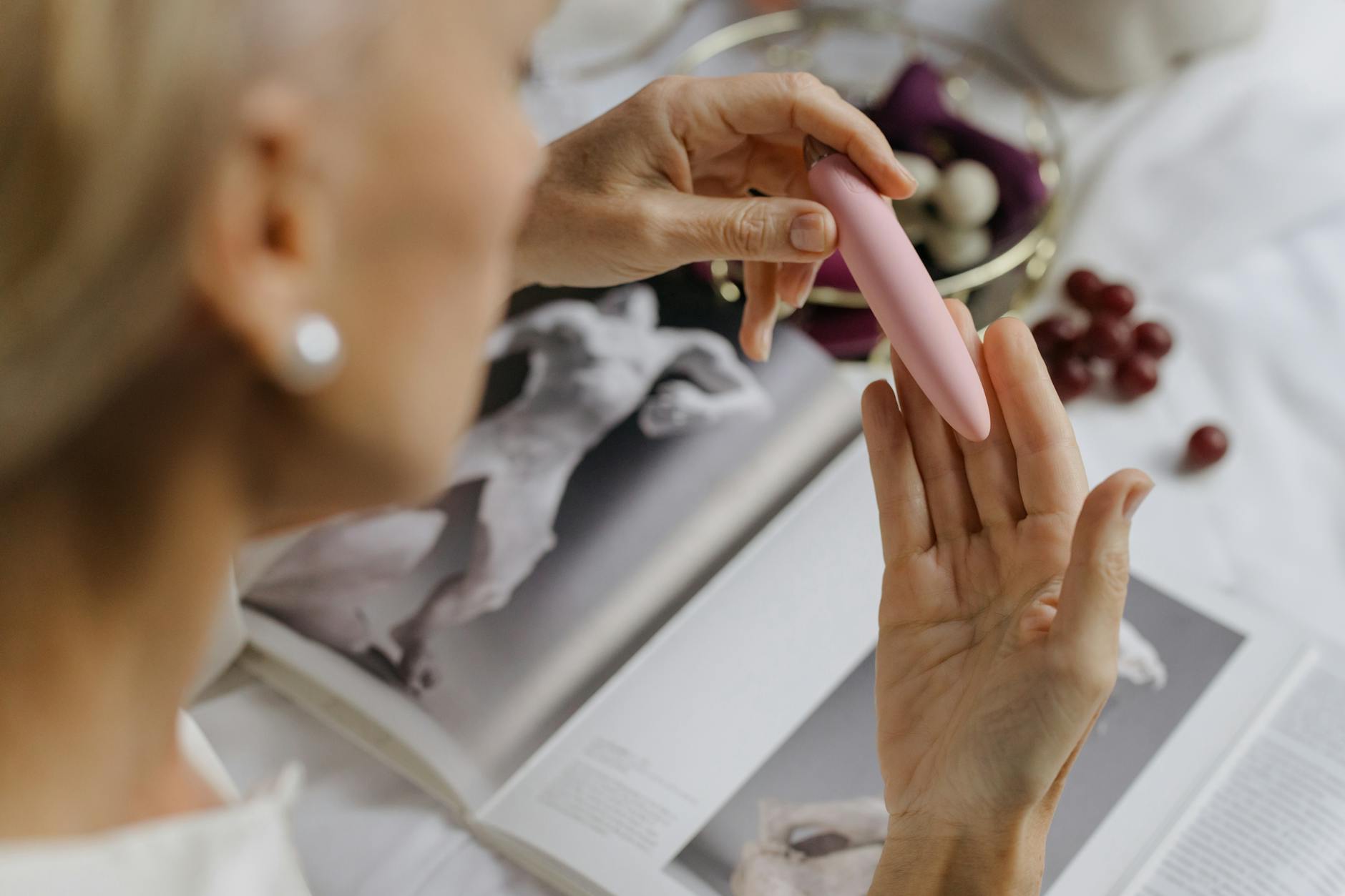
Photo by cottonbro studio on Pexels
How to actually use it your first time
Start with the lowest intensity setting. The Lemon Massager gives you multiple speed options, and your first instinct might be to jump to medium because you think you should be able to handle it. Resist that. Low intensity lets you adjust to the sensation without overwhelming your system.
Hold the vibrator against your clitoris at a 45-degree angle rather than directly perpendicular. Most people find the angle more comfortable and less intense than a straight-on approach. You're looking for pressure against the hood of the clitoris, not direct stimulation of the glans, which can feel too sharp if you're unused to solo vibration.
Breathe. This sounds simple but most people hold their breath during early exploration because their nervous system is registering both pleasure and vulnerability simultaneously. Shallow breathing keeps you locked in that tension. Slow breathing tells your parasympathetic nervous system that you're safe. You are.
Don't chase the finish line. This is the hardest instruction to follow because after years of sex being goal-oriented, your body expects climax. But your first few sessions aren't about reaching orgasm. They're about rediscovering what sensation you like. Some people orgasm immediately. Others take four or five sessions to reconnect. Both are completely normal.
What to expect emotionally in these early sessions
You might feel nothing the first time. You might feel everything. Both responses are legitimate. Some people experience a wave of grief in the middle of solo pleasure because it highlights the fact that partnership has ended. That grief is not a sign you're doing something wrong. It's just old pain rising to the surface while you're creating new sensation.
Other clients describe a surprising sense of agency. The ability to set the pace, intensity, and duration without negotiating with anyone creates a kind of freedom that's been absent for years. That feeling usually deepens over repeated sessions.
Some people experience a blend: pleasure mixed with awkwardness or self-consciousness, even though they're alone. That's your internalized second-guessing. It usually diminishes significantly after the third or fourth time. Your nervous system learns: this is a safe, private practice.
If you find yourself stuck in performance mode even when alone, that's worth paying attention to. It suggests you might benefit from working with a therapist on the psychological aftermath of the separation. Many people do. There's no shame in needing that additional support.
Ramping up your practice over weeks
After your first session, don't rush to try different settings or patterns. Spend a few sessions at the intensity level that felt most natural. Repetition builds neural pathways that support arousal. Your body learns what to expect and starts preparing accordingly.
Once you've found your comfortable intensity, you can gradually experiment with other settings. The Lemon Massager's range means you have options to explore without going from zero to overwhelming. Some sessions you might stay low and slow. Others you might move to medium. This variability keeps exploration fresh and helps you learn what your body wants on different days.
After a few weeks of consistent solo practice, most clients report increased natural lubrication, easier arousal, and more reliable orgasms. That's not a fluke. That's your nervous system recognizing the context as safe and responding accordingly.
Many people also find that reconnecting with solo pleasure makes them more confident and grounded in other areas of post-divorce life. There's research backing this. Sexual confidence correlates with emotional resilience and clearer boundaries. You're not just rediscovering pleasure. You're rebuilding yourself.
When to bring a partner into the picture (if and when you want to)
There's no timeline for this. Some people enjoy a year of solo practice before partnered sex sounds appealing. Others are curious about how a partner would respond to their new self-knowledge within weeks. Both timelines are fine.
If you do want to eventually introduce a partner to your lemon vibrator practice, the groundwork you've laid solo is invaluable. You know what you like. You can show them. You can direct. That agency is radically different from the negotiation that happened pre-divorce. This time, you're not discovering pleasure together. You're inviting someone into pleasure you've already reclaimed.
Many couples also find that solo vibrator use continues alongside partnered intimacy. It's not a stepping stone. It's a practice that stands alone and enriches partnered sexuality simultaneously.
The bigger picture: pleasure as reclamation
I frame solo pleasure after divorce as reclamation work. You're reclaiming the right to want without explanation. The right to take time for yourself without guilt. The right to know your own body as primary, not secondary.
Using a lemon clitoral vibrator is practical and straightforward. But what it represents is bigger: the assertion that your body, your pleasure, and your desire belong to you first. That ownership is what actually changes post-divorce.
Start small. Be patient with yourself. Expect that some sessions will feel amazing and others will feel awkward or even uncomfortable. That's all part of the process. You're not broken. You're not out of practice in a way that's permanent. You're simply relearning a conversation with yourself that was interrupted.
Your pleasure matters. Solo pleasure, especially, matters. It's how you remember that you are worthy of good sensation and good care. Start there.
People also ask
Is it normal to feel guilty using a vibrator after divorce?
Completely normal. Many people internalize messages that solo pleasure is frivolous or that they should be focused on healing rather than pleasure. Here's the truth: pleasure is part of healing. Your nervous system downregulates through safe, enjoyable sensation. You're not being self-indulgent. You're practicing self-regulation. If the guilt persists beyond a few sessions, journaling about where that message came from can help. Often it traces back to family beliefs about sexuality that predate the divorce by decades.
How long before I can orgasm with a lemon vibrator after being away from solo pleasure?
It varies. Some people orgasm their first session. Others take four to eight sessions. A few take longer. The variability depends on stress levels, how recently the divorce finalized, whether you're on medications that affect sexual response, and how disconnected you feel from your body generally. Patience matters more than speed. The goal is reconnection, not orgasm. Orgasm usually follows once reconnection is solid.
Should I use a lemon vibrator if I'm still grieving the divorce?
Yes. Grief and pleasure aren't mutually exclusive. Many people find that gentle self-pleasure actually helps them process grief because it signals to the nervous system that there's still goodness available. Your body deserves care and sensation even while you're mourning a relationship. In fact, they often happen simultaneously for months or years. That's okay.
Can I use the Lemon Massager alongside therapy for post-divorce healing?
Absolutely. Many therapists actually recommend it as part of nervous system regulation work. If you're working with someone, you don't need to discuss your vibrator use unless you want to. But if it comes up in the context of reclaiming pleasure or rebuilding confidence, most modern therapists recognize it as healthy self-care. Some even recommend it explicitly as part of your homework between sessions.
What if I don't feel attracted to anyone after trying solo pleasure?
That's a separate question from solo pleasure and worth exploring. Some people need months or years before they feel sexual attraction to others post-divorce. That's not a flaw. That's your nervous system prioritizing self-trust over external connection. Keep practicing solo pleasure. Eventually, if you want partnered intimacy, your body will signal readiness. Forcing it before you're genuinely curious rarely works.
Can I use lemon vibrators with decreased sensation from stress or antidepressants?
Yes. In fact, many of my clients find that when numbness is medication-related or stress-induced, a clitoral vibrator like the Lemon can help bypass reduced sensitivity. The suction-based technology provides stronger stimulation than your fingers alone. If you're on antidepressants that lower sexual response, that's worth discussing with your prescriber, but solo vibrator use is never harmful and often helpful for maintaining sexual function.
Your next step
If you're rebuilding after divorce and haven't explored solo pleasure in years, starting with a Lemon Massager is one of the gentlest entry points available. You're not committing to anything except twenty minutes alone with yourself. That's it.
For additional guidance on navigating post-divorce intimacy or other relationship transitions, reach out. Contact us if you'd like to discuss your specific situation with someone trained in relationship recovery work. We're here to help you move forward with confidence.