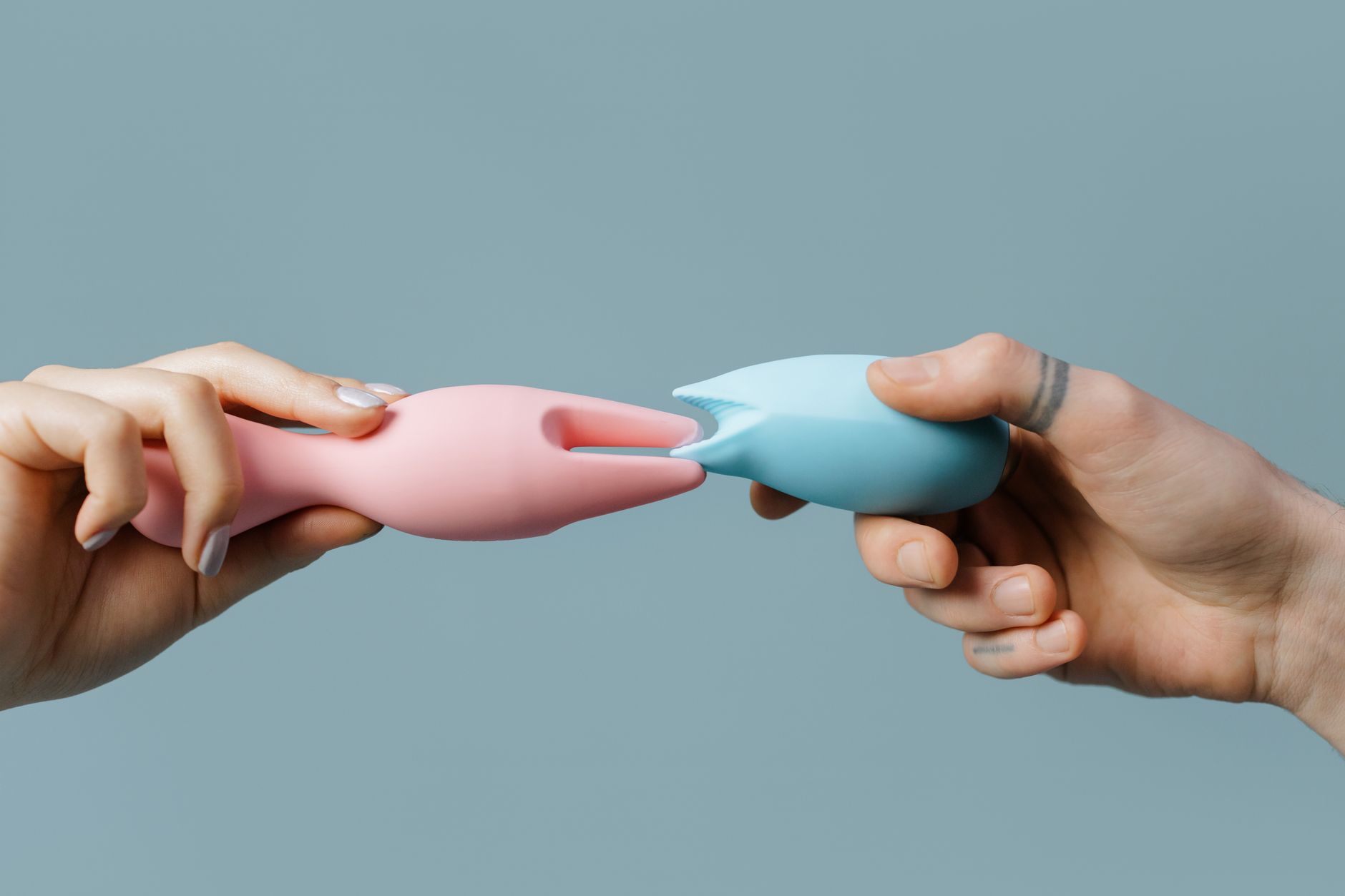
Let's talk about the thing nobody says out loud
Not everyone orgasms easily. About 15-25% of women report consistent difficulty reaching climax, and that number climbs higher when you factor in anorgasmia caused by medication, hormonal shifts, or relationship dynamics. You're not broken. Your body isn't defective. But there's a good chance the tools and strategies you've been using were designed for a different neurological setup entirely.
I work with couples where one or both partners struggle with orgasm. The pattern is always the same: they try harder, feel more pressure, and the orgasm gets further away. A lemon clitoral vibrator works differently because it stops asking your body to perform and starts working with how it actually responds.
Why traditional vibrators often fail for anorgasmia
Most standard vibrators rely on sustained rhythmic vibration. That works brilliantly for people whose nervous systems respond predictably to repetitive stimulation. But if you fall into the category of people who don't orgasm easily, your brain might be wired differently. Your orgasmic threshold could be higher, your attention harder to hold, or your arousal pattern non-linear.
With a traditional vibrator, you're locked into escalating intensity. Up, up, up. But many people with anorgasmia need something else entirely: variation, surprise, stimulation that doesn't feel like it's chasing a finish line.
Lemon suction-based vibrators work on a completely different mechanism. Instead of buzz, they create rhythmic suction and release against the clitoral head. That sensation bypasses the desensitization trap that many people with anorgasmia hit with standard vibrators. Your nerve endings don't numb out the same way.
The neuroscience of why suction changes the game
Your clitoris has about 8,000 nerve endings concentrated in a tiny area. Traditional vibrators overstimulate that same small zone. After 10-15 minutes, your nervous system habituates. The sensation becomes background noise.
Suction works differently. It stimulates the entire clitoral structure, not just the surface. It engages deeper nerve pathways that don't fatigue as quickly. For people with anorgasmia, this means you can stay in the sensation longer without hitting that wall where nothing feels like anything anymore.
Additionally, the pulsing quality of suction (like the Lemon Massager's rhythmic pattern) creates what neuroscientists call "predictable novelty." Your brain expects the next pulse but experiences a tiny surprise in how it feels. That combination keeps your nervous system engaged without overwhelming it.
Building arousal differently when orgasm doesn't come naturally
If you've struggled with anorgasmia, you probably already know that standard advice doesn't work. "Relax" is useless when relaxation itself becomes the focus. "Think sexy thoughts" is impossible when your brain is busy monitoring whether anything is happening.
Here's what I tell my clients instead:
Start without the lemon clitoral vibrator. Spend 10-15 minutes with your hand, focusing entirely on sensation, not outcome. What does each touch feel like? Warm, tingly, numb, electric? Don't rate it on a pleasure scale. Just notice. This rewires your brain away from the performance loop.
Then introduce the lemon vibrator on the lowest setting. Don't go straight to the spot you think "should" work. Start on your inner thigh, your labia, everywhere around the clitoris. Let your body surprise you about where it actually wants stimulation. Many people with anorgasmia have been conditioned to ignore their body's actual signals in favor of where they're "supposed" to feel pleasure.
When you do move to the clitoral area, stay there for 30-60 seconds, then move away. Create the pattern of engagement and release. This is the opposite of the relentless escalation that often fails for anorgasmia sufferers.
The role of context and mental state
Here's something clinical data backs up but therapists rarely emphasize: if you don't orgasm easily, your environment matters more than your technique. Stress, distraction, relationship anxiety, and even the feeling of being watched all suppress arousal in ways that hardware alone cannot fix.
I had a client who couldn't orgasm in her marriage, though she could solo. When we dug into it, the issue wasn't physical. It was that she felt performance pressure the moment her partner was present. We worked on that relational piece separately from the pleasure piece. Once she could breathe, a basic lemon clitoral vibrator became effective. The vibrator didn't heal the problem. The context shift did.
If you're using a lemon vibrator and anorgasmia persists, ask yourself: Am I alone? Am I safe? Can I let go of the goal right now? If the answer to any is "no," your body isn't the problem. Your context is.
When medication or hormones are the culprit
Some of the most difficult anorgasmia cases come from antidepressants, hormonal birth control, or postmenopausal shifts. These change the brain chemistry that drives orgasm. A lemon suction vibrator can help, but it's not a substitute for addressing the root cause.
Talk to your doctor about timing. Some people find that taking their SSRI at night rather than morning leaves their daytime sexual response more intact. Others cycle their birth control differently. Some benefit from topical estrogen if they're postmenopausal and have tissue thinning contributing to the difficulty.
Once you've optimized that layer, lemon clitoral vibrators become genuinely useful. The suction provides the extra stimulation your altered chemistry needs without the overstimulation fatigue of traditional vibrators.
Building a realistic timeline
I want to be direct: if you've struggled with anorgasmia for years, a lemon vibrator isn't going to flip a switch in one session. But here's what you can realistically expect.
Week 1-2: You'll notice the sensation feels different. Less buzzy, more rhythmic. Your body might feel less numb during stimulation. That's progress, even if you don't climax yet.
Week 3-4: You may notice arousal building differently. Less plateauing, more momentum. Some people hit orgasm here. Others notice they're closer than they've ever been.
Month 2+: If you're consistent and the context is right, many people who struggled for years report their first reliable orgasms. Others find they're having orgasm-adjacent experiences that feel like progress, even if they don't match the textbook definition.
The key is consistency and patience. Using a lemon clitoral vibrator sporadically won't rewire your nervous system. But daily or regular use, combined with the context work, often shifts things significantly.
What to do if it's still not working
Anorgasmia sometimes has deeper roots: past trauma, complex medication interactions, relationship issues that need professional support, or neurological variation that doesn't respond to standard interventions. If you've given lemon vibrators an honest month of use and nothing is shifting, that's information, not failure.
Consider working with a sex therapist who specializes in anorgasmia. They can assess whether this is medical, relational, or neurological. For some people, the solution involves all three layers. You deserve support from someone trained in all of them, not just a vibrator.
The pleasure point you might be missing
Here's what I've learned: people with anorgasmia often define success too narrowly. They're waiting for the orgasm. But in the meantime, they're missing deeper pleasure. A lemon vibrator frequently creates something people didn't expect: arousal that feels genuinely good even without climax, a body that feels awake and present, a nervous system that's engaged.
That matters. It's not "second best" to orgasm. It's a legitimate form of pleasure that many people with anorgasmia have been trained to ignore in their search for the brass ring. Sometimes the generosity is in letting that pleasure count.
FAQ
How long does it take to orgasm with a lemon vibrator if you have anorgasmia?
There's no standard timeline. Some people orgasm within weeks of starting with a lemon clitoral vibrator. Others need months of consistent use to rewire their nervous system. Many discover that pleasure without orgasm becomes its own valuable endpoint. The key is shifting from performance pressure to genuine exploration.
Can lemon vibrators help if you don't orgasm from antidepressants?
Lemon vibrators can help by providing a different quality of stimulation that doesn't fatigue the same way traditional vibrators do. But medication-related anorgasmia often needs a multi-layered approach: talking to your prescriber about timing or alternatives, using a vibrator for sustained arousal, and potentially working with a sex therapist on the mental components. The vibrator is one tool in that toolkit, not a replacement for the others.
What's the difference between anorgasmia and taking a long time to orgasm?
Anorgasmia means persistent difficulty reaching orgasm despite adequate stimulation and arousal. Taking a long time means you can orgasm, it just requires more time or a specific approach. If you take 20 minutes with the right stimulation, that's not anorgasmia. If you've never experienced orgasm or can't reach it even with extended effort, that's different and may benefit from professional assessment.
Should you use a lemon vibrator solo or with a partner when you have anorgasmia?
Start solo. This removes performance pressure and lets your body respond without the weight of another person's expectations. Once you understand how your body works with a lemon clitoral vibrator, you can introduce it with a partner if you want. Some people find partner presence makes anorgasmia worse due to anxiety. That's information worth knowing first.
Can you become dependent on a lemon vibrator if you have anorgasmia?
Dependency isn't usually the issue with anorgasmia. If anything, lemon vibrators help retrain your nervous system to respond more broadly. The goal isn't to need the vibrator forever. It's to use it as a bridge until your body remembers how to respond, then gradually reintroduce other types of touch. For some people, the lemon vibrator becomes a permanent part of their pleasure toolkit. That's fine too.
What if you've tried multiple vibrators and nothing works?
That's a signal to expand beyond vibrators. Anorgasmia sometimes responds better to hands-on work, partnered exploration, addressing relationship stress, shifting medications, or working with a trauma-informed therapist if past experiences are blocking pleasure. A lemon vibrator is excellent for many cases, but it's not the answer for every person. Professional support can help you identify what your specific situation needs.