Why Lemon Vibrators Feel Better for Partners After Menopause
Here's the thing nobody tells you. When menopause happens, pleasure doesn't end. But the path to it shifts. Tissue gets thinner. Arousal takes longer to build. And the toys that worked beautifully before can suddenly feel too intense, or not intense enough, or just plain uncomfortable.
If you're navigating this with a partner, or if you're discovering your own body post-menopause, there's good news. The right tool makes an enormous difference. And that tool is usually a suction-based clitoral vibrator like the Lem.
How menopause changes tissue response
Let's start with the physics. Estrogen declines during menopause, which means the vulva's tissue gets thinner and less elastic. The vaginal wall changes too. Lubrication decreases naturally, though not because desire has disappeared. It's purely hormonal.
This matters for stimulation because friction-based vibrators (like traditional bullet or wand vibrators) were designed for pre-menopausal bodies with more resilient tissue. When you apply a buzzing vibration directly to thinner tissue, it can feel rawer, more sensitive to the point of discomfort, or require so much lubrication that the sensation gets muted.
That's where suction technology enters the picture.
Why suction beats friction for post-menopausal bodies
Suction-based vibrators work differently. Instead of vibrating against the clitoris, they create a gentle pulling sensation that stimulates the nerve endings surrounding it. You're not relying on direct friction against delicate tissue. You're using air pulse patterns to activate the clitoral complex from the outside in.
For post-menopausal bodies, this changes everything.
First, suction feels less abrasive. The tissue doesn't take the same mechanical beating. You get intense stimulation without the rawness or risk of irritation that can come with traditional vibrators.
Second, suction works with thinner tissue, not against it. The gentler approach actually creates space for deeper sensation. Many of my clients report that their strongest orgasms after menopause come from air-pulse stimulation, not vibration. The pattern seems to bypass some of the surface sensitivity issues and hit nerve pathways more directly.
Third, you need less lubrication. Because there's no friction, you're not applying a wet layer and then sliding a vibrator across it. The suction creates its own seal. That means fewer interrupted sensations and a cleaner feedback loop between body and toy.
The Lem vibrator and post-menopausal pleasure
When I talk about lemon vibrators with clients navigating this transition, the Lem usually comes up. It's a clitoral vibrator designed around suction technology, which is precisely what post-menopausal bodies respond to best.
The Lem uses gentle air pulses rather than traditional vibration. You control the intensity through patterns, not just speed. That matters because it lets you find the sweet spot without jumping from "barely anything" to "too much." Post-menopausal bodies often need that graduated approach.
It's also relatively compact, which is useful because arousal takes longer to build and you might be using it for extended sessions. A smaller, quieter tool means less arm fatigue and more space for intimacy if you're with a partner.
How to integrate a clitoral vibrator into partnered pleasure
If this is new territory for you and your partner, a few practical notes.
First, have the conversation before you're in the bedroom. "I've noticed my body responds differently now, and I want to try something that might feel better for both of us" is a sentence that opens doors instead of closing them. Partners often feel relieved to hear this because it shifts the dynamic from "something's wrong with her" to "here's what works now."
Second, start with external stimulation only. The Lem works beautifully on the vulva's exterior. You don't need to penetrate. In fact, if you're experiencing any vaginal dryness or discomfort, staying external removes that variable entirely.
Third, build in time. Arousal after menopause typically needs 15 to 25 minutes of foreplay and stimulation before you reach the peak. That's not a bug. It's actually an opportunity. More time together, more touch, more connection. Partners who reframe this as a gift instead of a problem find that intimacy deepens.
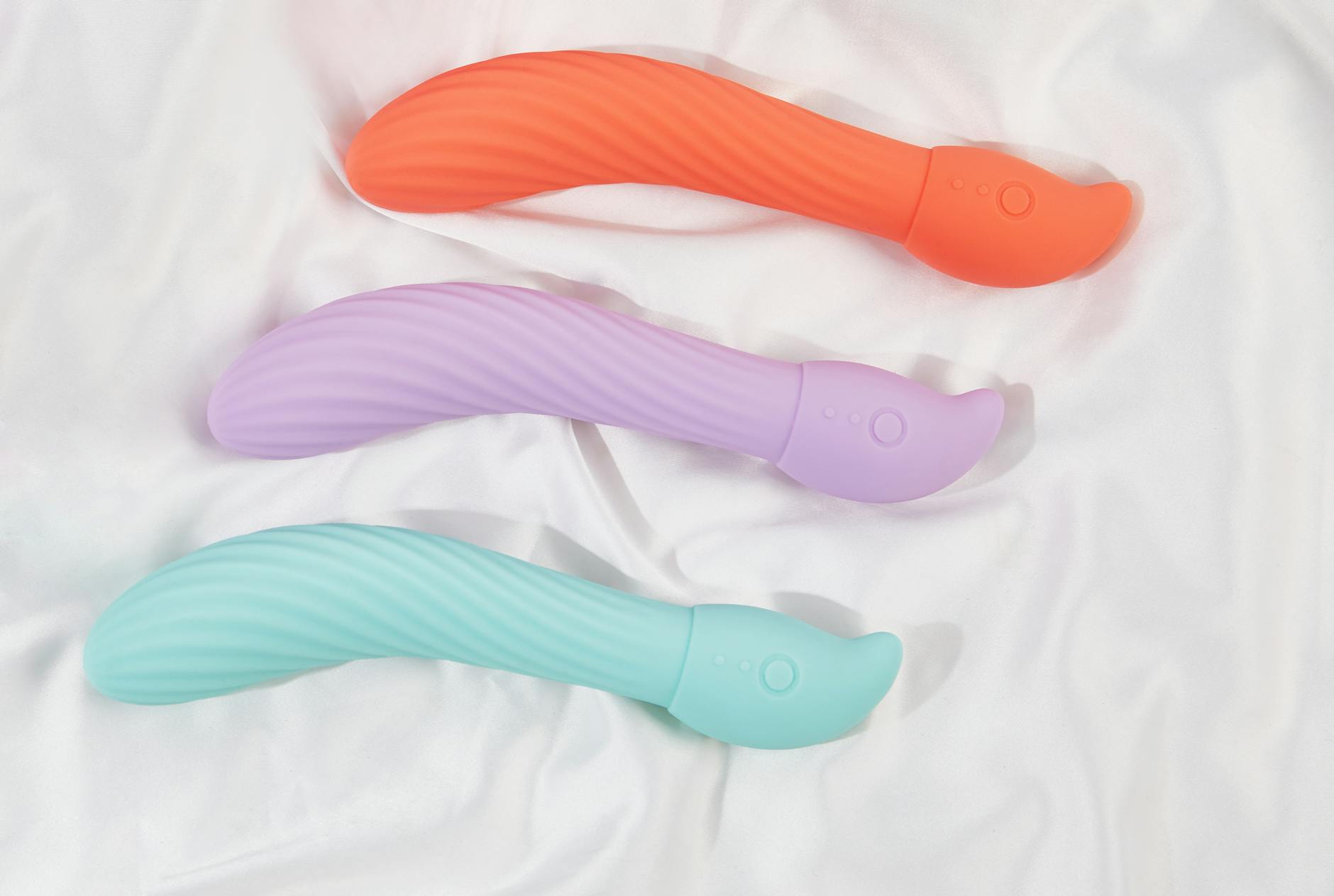
Photo by IFONNX Toys on Pexels
When to use lubrication with a suction vibrator
You might assume suction vibrators don't need lube because they work differently. Actually, a small amount of water-based lubricant can enhance the seal and create smoother sensation. Think of it less like lubrication for friction and more like a conductor for the suction pattern.
But here's the key difference from traditional vibrators. You need way less. A dime-sized amount is usually enough. Too much and the seal breaks, and the toy loses effectiveness. This is actually one of the practical wins for post-menopausal bodies. You're not layering lube to protect delicate tissue. You're just optimizing the seal.
Tissue recovery and long-term sensitivity
One thing I mention to clients is that menopause isn't a static state. Estrogen levels can stabilize after the transition. Some people choose hormone therapy, which changes the tissue picture entirely. Others find that consistent sexual activity (solo or partnered) actually improves tissue health over time.
The clitoris is a robust structure. It has excellent blood flow and responds well to regular stimulation. People who maintain an active sexual life post-menopause often report that sensitivity improves, not worsens, over the years following menopause.
This is why the conversation with a partner matters so much. This isn't a temporary fix for a temporary problem. It's an opportunity to build sustainable pleasure that works with your body as it changes.
Pleasure after 50 is often better than before
Here's what I've observed in my practice. People who move through menopause with honest information and the right tools often experience their most satisfying sexual years after 50. The mental clarity helps. The absence of fertility concerns helps. The permission to prioritize your own pleasure, separate from a partner's expectations, helps.
And yes, having a tool designed for post-menopausal bodies helps too. The Lem and other suction-based clitoral vibrators aren't a Band-Aid for a problem. They're the right technology for the right anatomy at this stage of life.
Menopause changes pleasure. It doesn't diminish it. And with the right information, the right approach, and tools built for how your body actually works now, your best sexual years might actually be ahead of you.
People Also Ask
Can you use a regular vibrator after menopause?
Yes, but you might find it less comfortable. Traditional vibrators rely on friction, which can feel harsh or irritating against thinner post-menopausal tissue. Many people find that suction-based clitoral vibrators like lemon vibrators are more comfortable and deliver stronger sensations without the rawness. If you love a toy you used before menopause, it's worth trying with extra lubrication and shorter sessions to see if it still works. But if it doesn't feel good anymore, switching to a different technology often solves the problem entirely.
Does menopause affect orgasm intensity?
Not in the way most people think. The orgasm itself doesn't get weaker. What changes is how long it takes to arrive and sometimes where you feel it most intensely. Some post-menopausal people report that orgasms feel more localized in the clitoral area rather than radiating through the pelvis. Others find them deeper or more concentrated. The neural pathways are still intact. You can still reach the same peak. The route just shifts. Using a lemon clitoral vibrator that works with your current tissue often brings back the intensity people felt before.
Should I use lubrication with air-pulse vibrators?
A small amount helps. Water-based lubricant creates a better seal between the toy and your skin, which makes the suction pattern more effective. But unlike traditional vibrators where you need a generous amount to protect tissue from friction, you only need a dime-sized dollop. Too much lube actually breaks the seal and reduces the vibrator's effectiveness. Experiment to find what creates the smoothest sensation.
Is it normal for pleasure to feel different after 50?
Completely normal. Hormonal shifts, tissue changes, and yes, sometimes relationship or stress factors all play a role. But normal doesn't mean unwelcome. Many people find post-menopausal pleasure more satisfying because it requires presence, communication, and self-knowledge. If the difference feels distressing, talking to a menopause-informed doctor or therapist helps. If it just feels different, that's okay too. Your body is still capable of incredible sensation. Sometimes you just need to discover the right approach.
Can menopause affect desire, not just physical sensation?
Yes, but often not the way people assume. Some people experience a dip in desire during the transition itself due to hormonal fluctuations and midlife stress. But many report that desire actually increases post-menopause, freed from contraception concerns and hormonal cycling. If desire has genuinely flatlined and it's causing relationship friction, it's worth discussing with a partner and potentially a healthcare provider. Testosterone therapy, better stress management, or deeper conversation about what "desire" means in your specific relationship can all shift things. You're not broken. You might just need to recalibrate.
Why do lemon vibrators work better than other toy types?
Lemon vibrators use suction technology, which stimulates the clitoris through gentle air pulses rather than direct friction vibration. For post-menopausal bodies with thinner tissue, this means more intense sensation with less irritation. You're activating nerve endings from the outside in, rather than buzzing directly against delicate tissue. Suction-based clitoral vibrators also require less lubrication and create that seal that protects tissue while delivering powerful stimulation. For many people, especially those experiencing tissue sensitivity after menopause, they're simply the right technology.
Final word
Menopause transforms your body, but it doesn't end your capacity for pleasure. What changes is how you get there. Understanding that difference, choosing tools designed for post-menopausal anatomy, and approaching this transition with honesty and curiosity can actually open doors to some of your best years. If you're navigating this with a partner, the conversation matters as much as the tool. If you're exploring solo, give yourself permission to try new approaches. Your body after menopause is still powerful, still responsive, and still worthy of pleasure.
Want more guidance on navigating intimacy through life transitions? Get in touch with us. We're here to support you.